
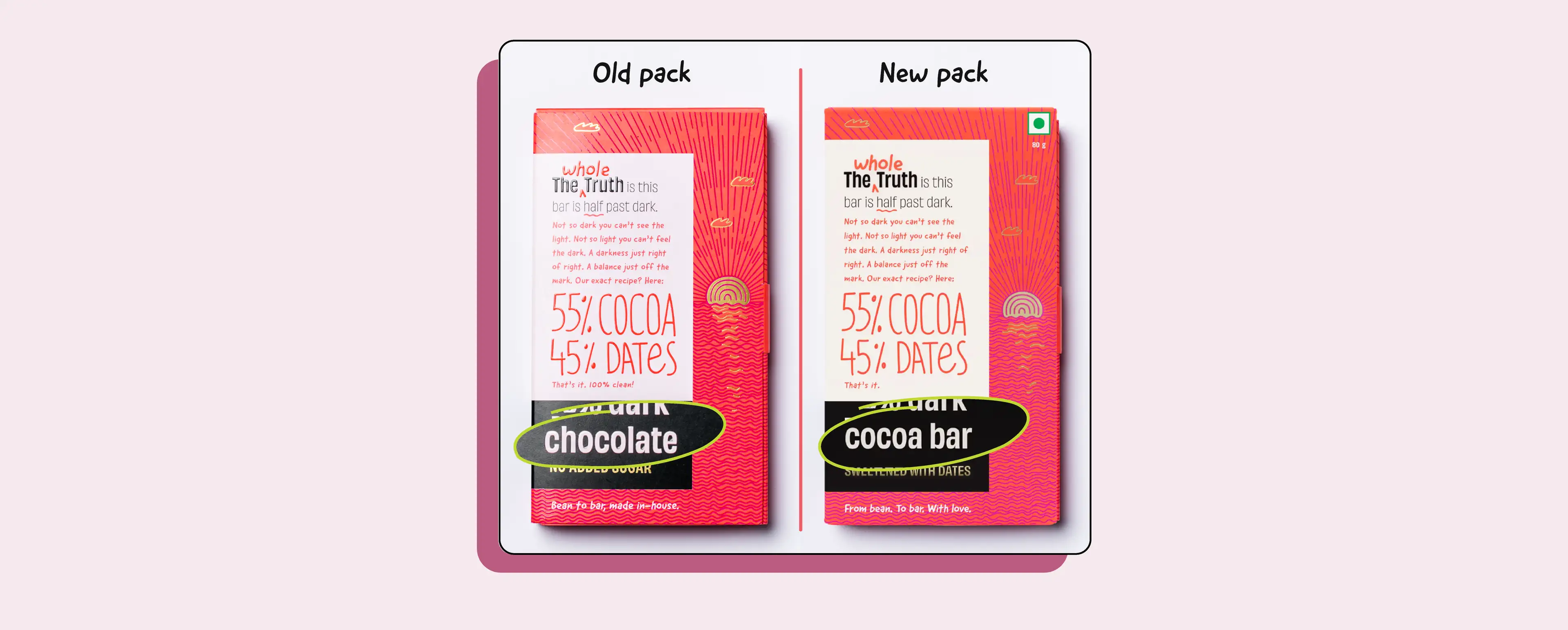
Why we renamed ‘chocolate’ to ‘cocoa bar’NEW
What, really, is dark chocolate?
Cocoa is at the heart of it. ‘Cocoa nibs’ give chocolate its characteristic flavour, and cocoa butter—the fat naturally found in cocoa beans—gives it the snap and the melt-in-mouth texture.
Our 55% dark bar is made with these two cocoa ingredients and dates for sweetening. Cocoa ingredients make up 55% of the bar, and date powder makes up the remaining 45%. That’s it.
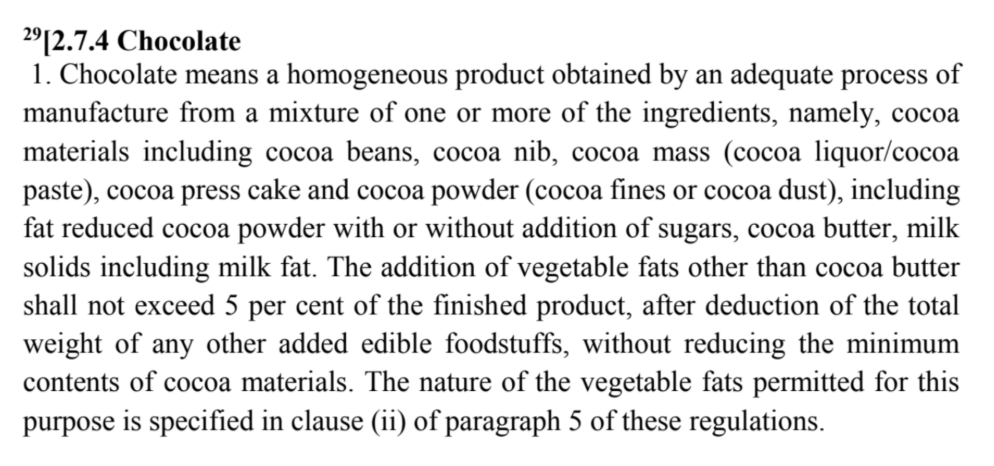
But what goes into a bar is only part of what determines whether it can be called ‘chocolate’. There are also regulatory definitions, which set out the composition a product must have to use that name.
When the existing definition was applied to our recipe, however, the regulator told us that our 55% bar couldn’t be called chocolate.
So we renamed it ‘cocoa bar’. The recipe hasn’t changed—still just cocoa and dates.
To understand why, we need to look at what the definition counts.
FSSAI recognises different categories of chocolate: ‘milk chocolate’, ‘plain chocolate’, and so on. Each category has its own requirements.
Under the regulatory interpretation applied to our recipe, date powder is counted as fruit, separate from the chocolate portion. Dates contain sugars too, but for this classification, the regulator says date powder is treated as a fruit ingredient.
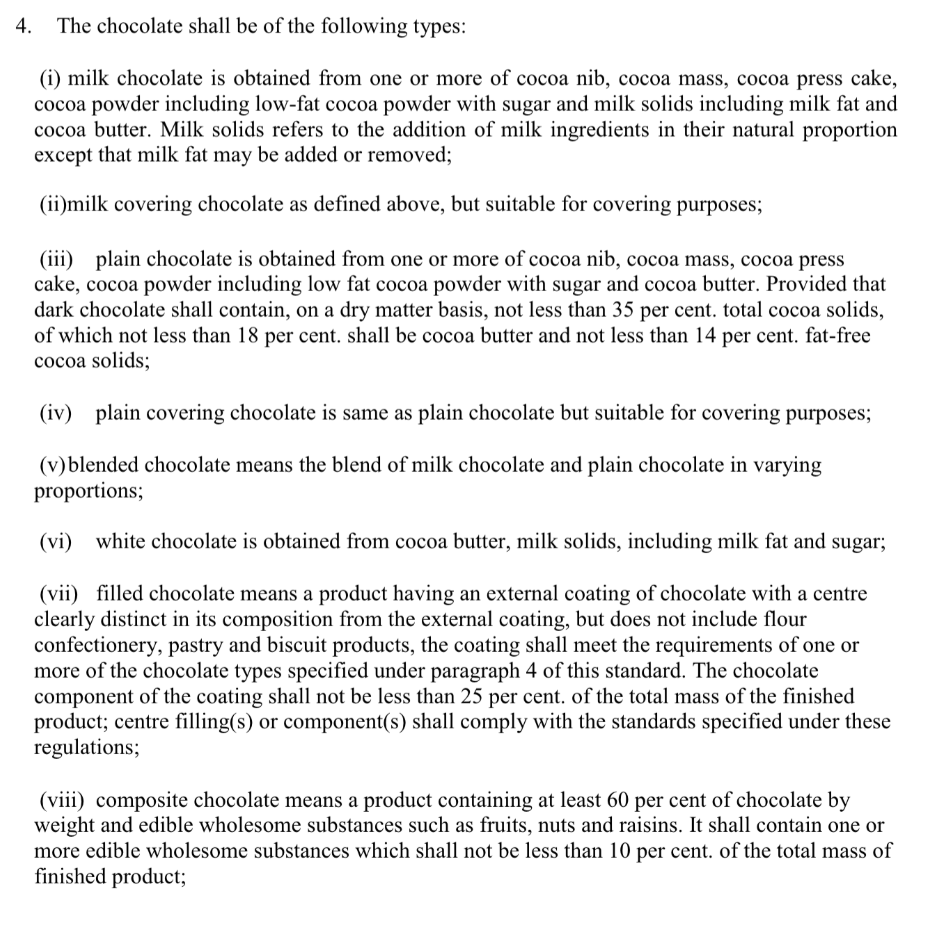
So the relevant category for our bar is ‘composite chocolate’— chocolate combined with ingredients such as fruits, nuts or raisins.
This category requires at least 60% chocolate by weight and at least 10% qualifying ingredients such as fruit or nuts. Because dates are counted separately, our recipe has only a 55% chocolate portion. It falls short of the required 60%.
But ‘60% chocolate’ does not mean ‘60% cocoa’. Chocolate is itself a mixture of cocoa ingredients and other ingredients, such as sugar. Any sugar used to make that chocolate counts towards its weight, even though it isn’t cocoa.
To understand the difference, let’s compare two 100 g bars:
- Our bar: 55 g cocoa ingredients + 45 g date powder
- An example bar: 55 g cocoa ingredients + 5 g refined sugar + 40 g date powder
In the example bar, the cocoa ingredients and sugar together make up a 60% chocolate portion. This meets the 60% requirement, even though the amount of cocoa is exactly the same as our bar.
Our bar has a 55% chocolate portion, which is below the 60% required for this category. That’s why we’ve renamed it ‘cocoa bar’.
Our 71% dark chocolate range could still be called chocolate under this classification. We’ve renamed it ‘cocoa bar’ too, to keep the names consistent across the range.
None of these name changes involve a change to the recipes. Each bar still contains the same cocoa nibs, cocoa butter and date powder, in the same proportions as before.