How I Unlearnt Strength (And Became Stronger)
I inherited a definition of strength that demanded suffering. The gym taught me a different one.

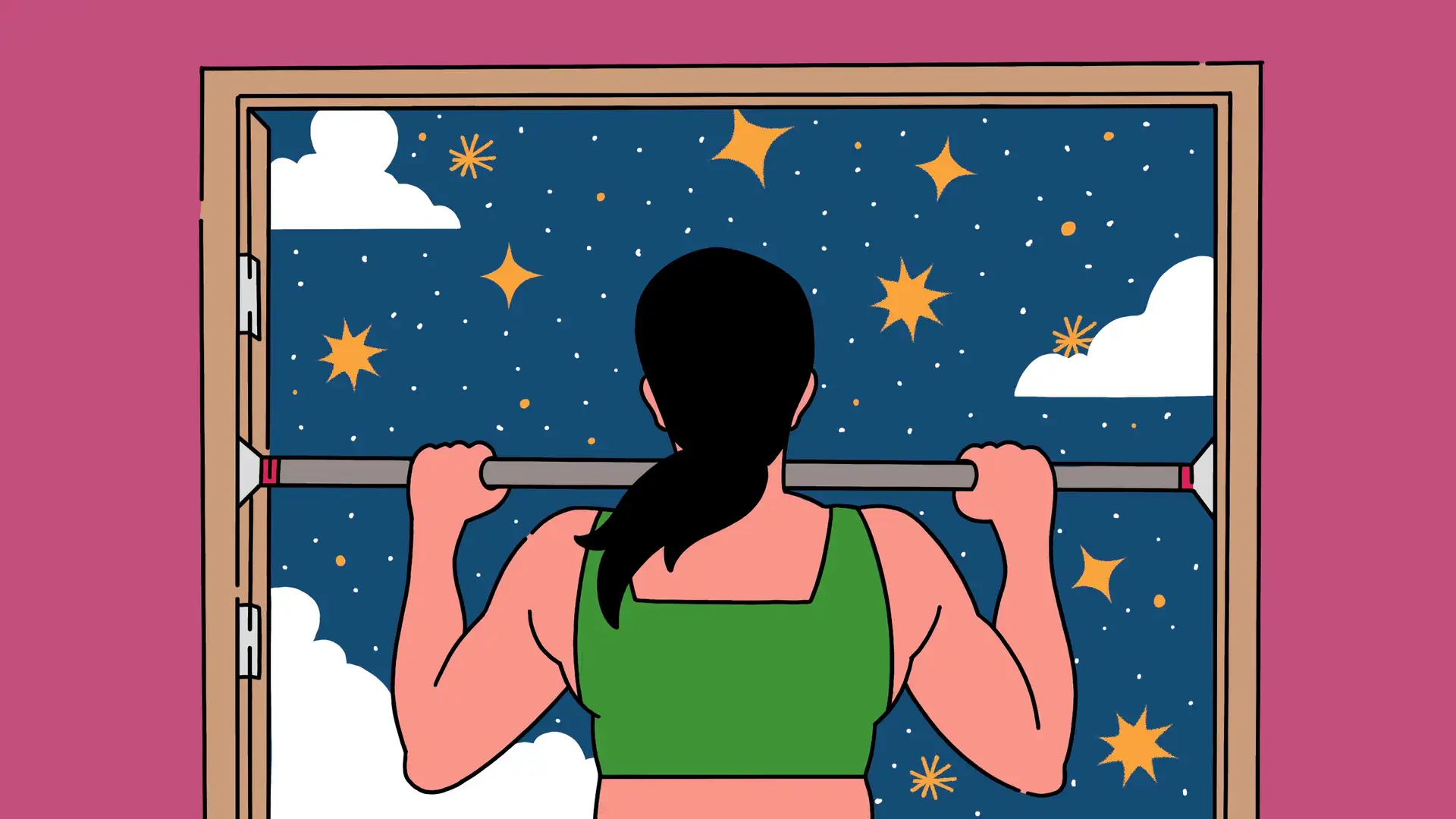
Illustration by Pratik Bhide
The most trustworthy source of food and
fitness journalism in the country.
Welcome to Truth Be Told, the food and health journalism publication published by The Whole Truth Foods.
Editor’s note: Hello, this is Samarth. Today’s piece is by my colleague Aashna Rane. In the first townhall after she joined us, she announced her goal to hit 10 pull-ups by the end of 2025. Now that was something. People remembered. People followed up. Over the year of working together, I kept hearing fragments—about her gym, about what she was figuring out, about how it was changing how she thought about work and the everyday bureaucracy of adult life.
So I asked her to write about it. I expected a fitness essay. But I didn’t know the backstory of the pull-up would give us a story about the idea of strength itself—and how its meaning can shift without you noticing until it already has. Make some coffee and read it.
Aashna is the co-founder of Culture Compass, an incubator for communities, and leads the community team at The Whole Truth Foods.
— Samarth Bansal (samarth@thewholetruthfoods.com)
I’ve always hated the treadmill. Deeply, boringly, soul-sappingly hated it.
In my building gym, there’s a window in front of the treadmill that opens out to rangoon creepers that bloom in the summer and attract pigeons with their shade. I’d make up games between the pigeons, pretending they were battling each other and keep mental score of imaginary bouts to while away the time. Soon I’d run out of games, and run through the list of tasks waiting for me.
Why did I torture myself like this? Movement is important for staying healthy, so I moved. I optimised for the most familiar and accessible one.
Across the gym, my partner Aaron would be weight training. I watched him sometimes. Not because I was paying attention, but because watching someone move freely and joyfully across a space was more interesting than what I was doing.
He took up the whole gym, moving from one machine to the next, exerting his weight on the weights instead of the other way around. His workouts energised him, and he loved playing music while working out. He’d often break into a dance mid set, or come up to me mouth a few lyrics and go back to his weights.
He took up the whole space. I took up a treadmill. I dismissed it as the type of people we are: he’s fun and I’m determined.
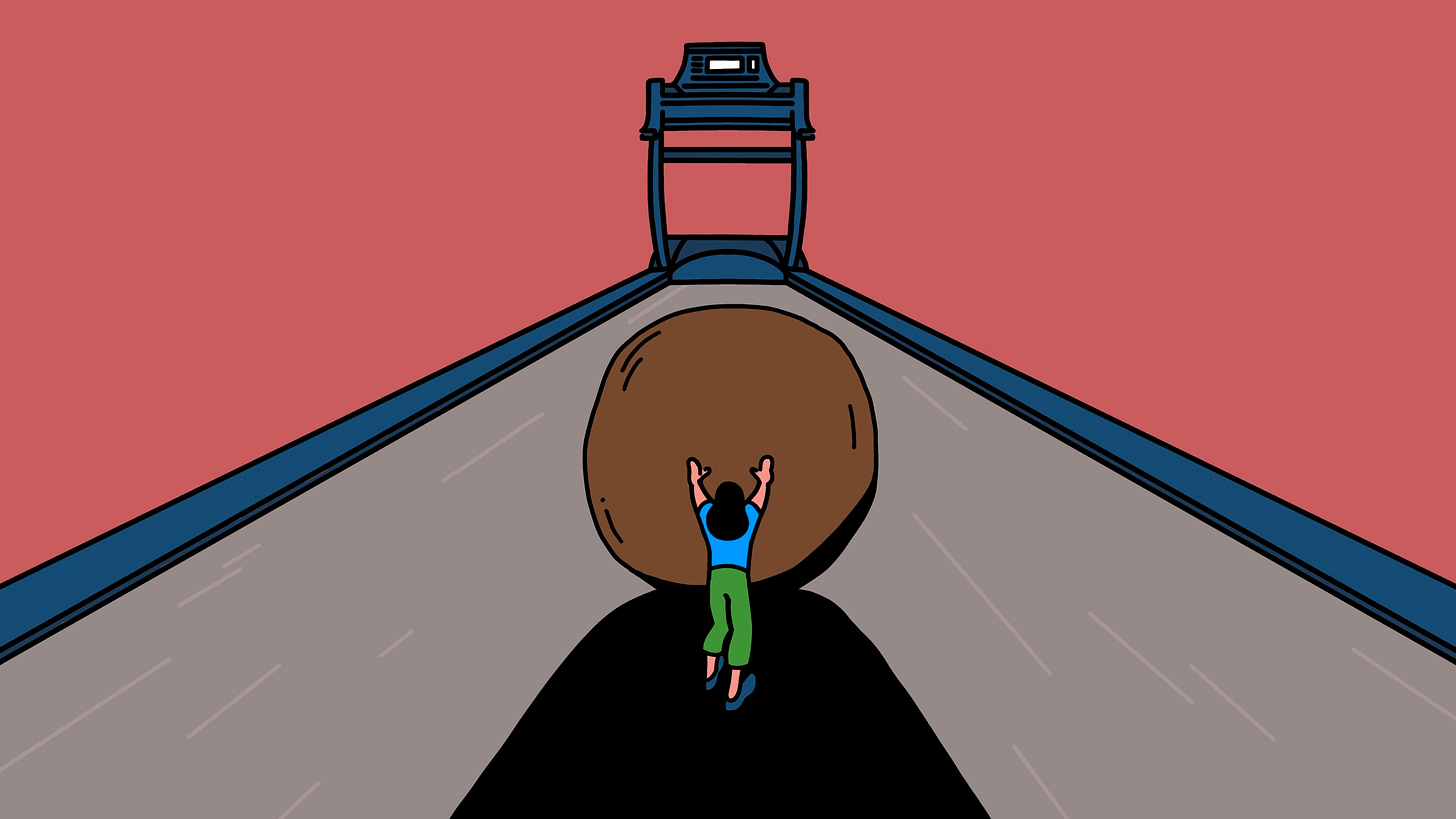
Illustration by Pratik Bhide
I first thought about the definition of strength when I was fifteen.
My father passed away in the thick of my 10th grade. I watched my mother navigate legal battles, financial pressure, grief, and the weight of holding a family together. All while staying true to the dream she and my father had of giving us a good education, a good life.
She was the definition of strong. Things get hard. You push through. You achieve what you set out to achieve. The quality of the journey is secondary to the worthiness of the destination.
Later that year, I sat my 10th grade exams and scored straight A’s. My teachers announced to my class how strong I was to do so well while dealing with what had happened. I received it like a medal. I held it close, filed it away as something true about me.
Looking at the faces of my classmates who had been uncertain about approaching me, I hoped that this signalled to them that I was strong enough to be treated normally now. My results proved that despite my internal state, I could achieve remarkable things on the outside.
My mother pushed through every single thing that was stacked against her and she delivered. That was strength. That was the blueprint.
This idea of strength became a big part of my identity and latched itself to my ambition. You can achieve anything if you struggle just enough for it. You do what needs to be done.
The blueprint served me well for a long time. Until it didn’t.
Towards the end of 2023, when a job for a mission I truly believed in started to break me, I knew what the solution would be. Push through the tough parts. Balance it out with rest. Try therapy. Take a long Sunday. Eat good food. Recover.
I tried all of it: assembled a badminton crew, set alarms to ensure 8 hours of sleep, built a long list of things to do to compensate for the overextension at work.
Even Sundays were planned: leisurely lunch for two hours, nap for an hour, and still catching up to my task list.
I turned to badminton first. It was both fun and effective as a movement that helped clear my head. But the coordination it took made it a mental workout in itself. I’d played competitively for years, and the sport demanded active effort to keep it challenging. It gave me more social rewards than mental ones.
I still needed a regular form of movement in my life, so I joined a Pilates class that was walking distance from my house.
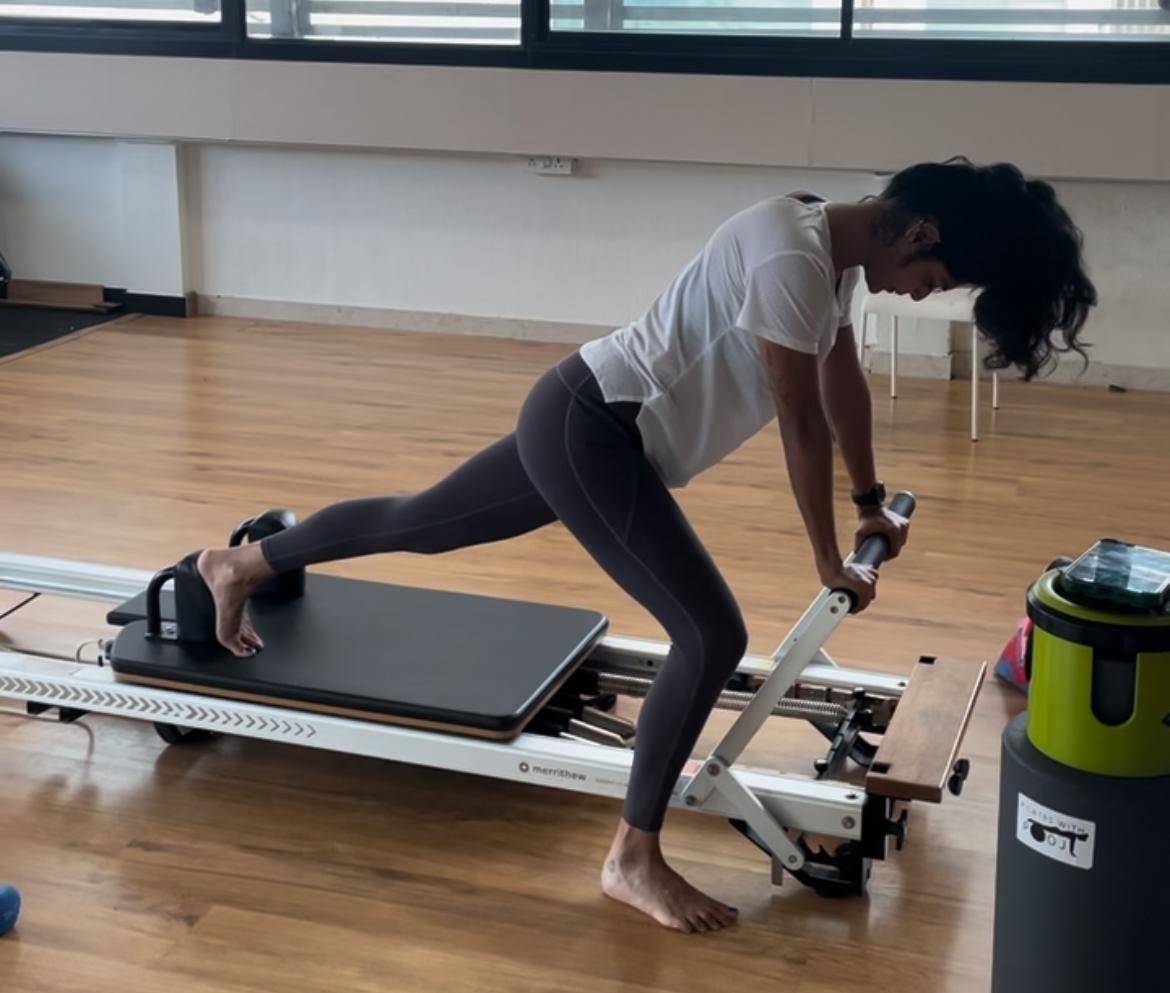
Once the novelty wore off, I found myself getting bored in Pilates too. I wasn’t breaking a sweat and had started assisting the instructor to demo the advanced movements. On my walks home, I wondered if I was in Pilates to feel good about myself or to get out of my head and into my body. The easier it felt, the more time I spent in my head. And I started skipping classes in favour of more sleep.
So if badminton was too hard and Pilates was too easy, what was the sweet spot? Does movement have to be so hard? Was I the problem: lacking discipline to stick to anything?
I questioned myself a lot those days. It didn’t make the emotional experience of navigating a tough job any easier. I was exhausted trying to build a life I was excited about and ultimately feeling nowhere closer to it.
So I planned nothing for the 10 days of Christmas 2023 break. No plans with friends, family, or even myself.
I gravitated towards spending more time with Aaron. Seeing the joy he experienced in the gym, I asked him to show me what he did. I usually never crossed past the cardio section—it’s teeming with men lifting weights that seem one slam away from breaking something. But the holidays meant fewer crowds, and gave us the gym all to ourselves.
I’d always believed strength training was meant for men who wanted to be bigger. My father did it, Aaron did it. I did thirty minutes on the treadmill because that was efficient, adequate and done.
With those assumptions but fewer constraints, I entered my ten day break. Those ten days were slow and exploratory and full of a feeling I had never once associated with a gym: wonder.
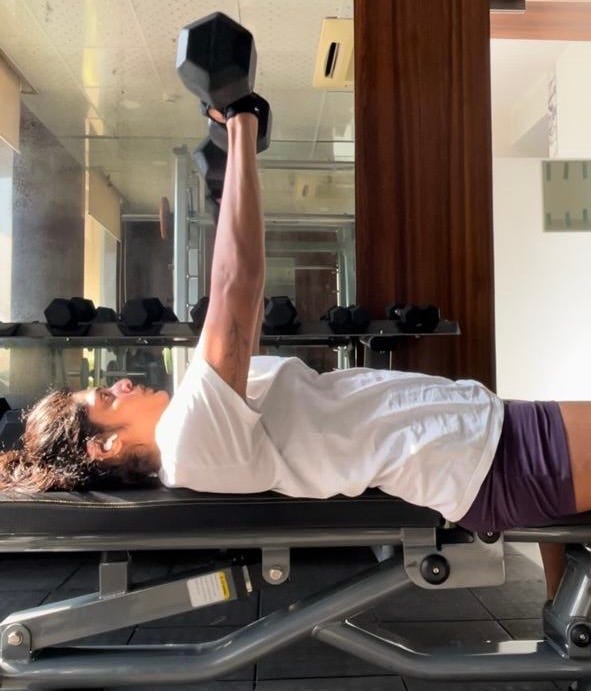
We started with a full body workout and every set introduced me to my body in a new way. During a bicep curl, I felt the bicep “travel” up the arm, the rotation of the shoulder when the weight tilted, the pump in my forearm when I used my wrist instead of my bicep.
I was excited to go back the next day. My legs always looked strong thanks to badminton, but I still discovered the tibialis. One set of tibialis raises and I was sweating.
I didn’t think of a single task that had to be done. I only focused on trying to engage my back muscles, humbled by how hard that simple instruction was to put in action.
My biceps really surprised me. By the end of ten days I’d gone from 5kg to 7.5kg and that fact—which sounds so small—landed like a revelation. Not because of the number. Because I used to be paranoid about a weight falling on me and crushing me. And now I was lifting it above my face. I was more capable than I thought. In something I never even considered was for me.
I wanted to know how every machine worked and what the correct form was for each. Many signals of good form are internal. I found it harder to follow tutorials than to just listen to whether it felt right.
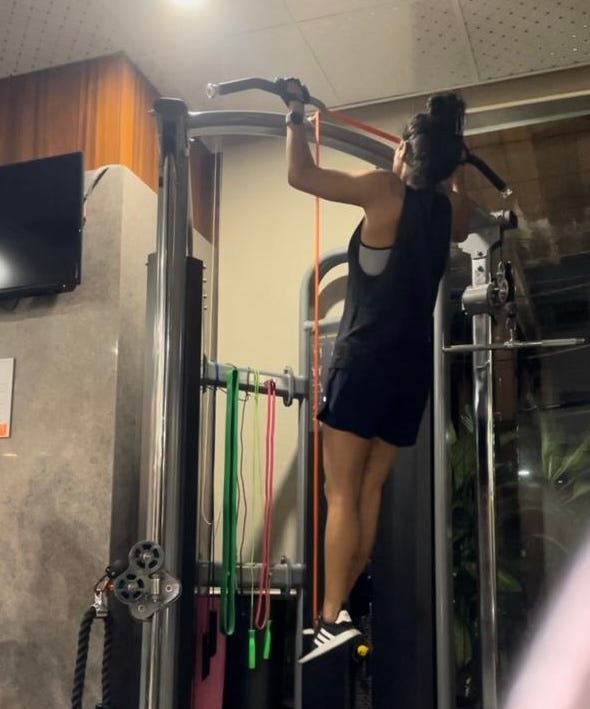
There was a pull-up bar in that gym. I asked Aaron to help me do an assisted pull-up—my first time crossing that bar. After having always looked up at it, once my chin crossed the bar I felt like I’d scaled a summit. I looked down at the weights, at the dust collecting at the top of the machine.
I wondered what it would feel like to do this by myself.
I can’t fully explain what it felt like except to say that the desire to do a pull-up was quiet and mine. Not because it’s a movement everyone should be able to do or because it’s good for longevity. Not in service of anything. Just: I wanted to see if I could get there.
I’m still working toward my first unassisted pull-up. And I find it interesting that this doesn’t frustrate me the way unmet goals used to. The bar is still there. I know what the view looks like. I’ll get there when I get there.
Outside of the gym, I was full of joy too. I enjoyed my food, I got restful sleep, I wrote, I read, I caught up with my friends. Those 10 days were a glimpse of what life felt like when I optimised for feeling good instead of feeling like I was doing the right thing.
What I didn’t realise at the time—and what I only understand looking back—is that the gym was becoming a rehearsal space. Not for discipline but for something I didn’t have a name for yet. Setting a goal that existed purely because I wanted it. Building toward it slowly and imperfectly. Discovering I was capable of it. Again. And again. Until the feeling started to feel like mine to keep.
I went back to work after Christmas and put in my papers.
No plan. A wedding coming up in less than a year. A notice period that I knew would be chaotic and consuming. I quit anyway. Not dramatically, not in a moment of crisis, but with a clarity that felt new.
The job hadn’t gotten worse. I just had new information about how effort was allowed to feel. I knew now what it was like to work hard at something and feel yourself getting stronger rather than more hollowed out. The job failed that test. I couldn’t unknow that.
Choosing myself over the mission I’d dedicated almost 2 years of my life to felt oddly relieving. I kept waiting for the anxiety to hit. It didn’t.
I kept training through the notice period. Not regularly, but I’d steal pockets of time during the gym’s slowest hours to spend some time with myself. Each day was different. Closer to my period, I couldn’t do progressive sets, so I learned about drop sets. Some days, I needed more time and spent two hours in the gym. I met myself where I was.
This translated into my work too. I took on small projects. I let curiosity shape the year: what can I do, what can I build.
I ended up with projects for personal knowledge management, team culture design, community strategy, community experience design. I went curiosity first, instead of destination first. Instead of backcasting from my ambition, I was forecasting from my skill.
The freelancing grew. I built my own workout routine based on what felt good internally. I kept getting stronger, hitting PRs and trying new movements.
When my wedding came around next Christmas, I looked like a different person. I was leaner, had that slight hint of abs and glowed a lot more. I’d be lying if I said the physical change didn’t help me stay committed.
What I was really doing, through that year of figuring out what came next, was accumulating evidence. Evidence that I could choose something, show up for it on my own terms, and get somewhere I wanted to go—without killing myself. The gym gave me that in small, repeatable, low-stakes doses until I had enough to spend outside.
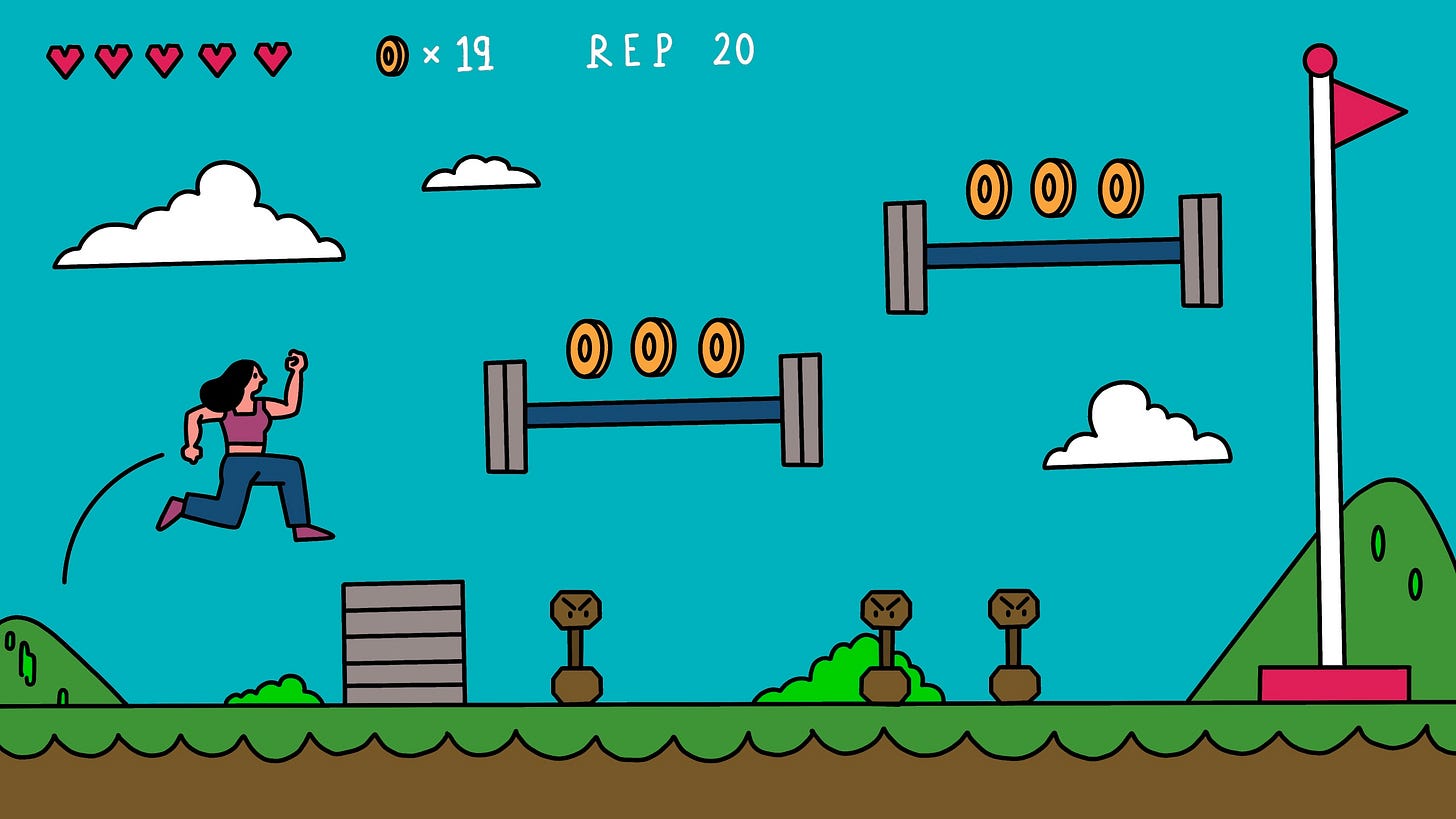
Illustration by Pratik Bhide
I spent it by taking on projects I wouldn’t have otherwise, meeting people, taking calls with no agenda. That’s how I met my co-founder.
We shared deep passion for the same problem. We balanced each other out well. It felt like a natural extension of the spirit of that year to consider starting a company. Just the spontaneity of it all made this bet feel like something the old blueprint would have called it reckless: wait until you’re more ready, more certain, more sure it’s worthy of the ambition.
I don’t think I would have taken this bet without those months of standing in a gym by myself. Of watching myself in the mirror, in my gear, lifting heavier and heavier weights. Of putting in the reps to make the impossible possible. Of choosing to want something for no reason other than the wanting.
My mother’s strength was real. It built my life. I will never stop being in awe of what she carried and how she carried it. I still aspire to be the kind of woman she is. But the lesson about strength I inherited left no room for caring about the journey towards my ambition. With all those “no pain, no gain” platitudes, I thought being strong enough to achieve your goals demanded suffering enough for it.
But strength is the ability to choose. To choose things that feel good without the whole weight of your identity resting on the outcome. And to trust yourself enough to make the choice real.
I go to the gym when life gets loud. Not on a schedule, not with hard requirements, not to punish myself or to earn something I want. I go because it’s the place where I most reliably remember what it feels like to be someone who sets a goal and gets there. I go to rehearse that feeling so I can take it with me.
The treadmill is still there. I walk past it now.
I’m working on my pull-up.