
How to Buy Eggs in India
Most of what you're paying extra for is marketing. The thing that actually matters is far more boring.


Illustration by Swaranjali Wadhawan
The most trustworthy source of food and
fitness journalism in the country.
Welcome to Truth Be Told, the food and health journalism publication published by The Whole Truth Foods.
Editor’s note: Hi there, this is Samarth Bansal, and I am co-writing today’s piece with my colleague Anushka Mukherjee. This is part two of our investigation on India’s egg supply chain.
In part one (read here), we wrote about the systemic problem of antibiotic residue in eggs. This piece focuses on something more practical: helping you make a better buying decision.
I’m writing this both as a consumer and as someone who now gets an inside view of the food industry through my work at The Whole Truth. And one thing becomes clear very quickly: much of this industry runs on opacity. Eggs move from farms to traders to transporters to warehouses to retailers, and at every step the consumer knows almost nothing.
That gap—the massive information asymmetry between brands and consumers—is where a lot of the industry’s marketing power comes from. What you don’t know becomes an opportunity to craft emotionally appealing campaigns and logical-sounding claims for features that often have very little real value. And the system runs on the assumption that consumer is busy, won’t ask too many questions and will simply use price as a shortcut to ease the anxiety.
It genuinely makes me angry.
Through our publication, in whatever small way we can, we want to break this. We want to reduce the information gap and return agency back to consumers. That’s what we’ve tried to do in this piece on eggs. I hope it helps.
As always, I welcome feedback and comments. You can reach me at samarth@thewholetruthfoods.com.
You walk into a store or open a delivery app to buy eggs. Start scanning through the options and suddenly egg-buying becomes a needless decision-making problem none of us asked for.
Should you buy brown eggs or white eggs? Are darker orange yolks healthier? Do omega-3 eggs really matter? Are loose eggs unsafe? Is a Rs 12 egg actually worse than a Rs 22 one? And oh, what about the DHA-enriched, selenium-rich, UV-sanitised, herbal-feed only or Kadaknath eggs?
Whatever you choose, the shelf—and the internet—will somehow make you feel like you might be making the wrong choice.
Because the industry wants you to believe all these eggs are different. That each variety contains something special which is worth paying extra for.
But here’s the thing: most eggs are nutritionally almost identical.
Eggs are, at their core, a commodity. They are not like specialty coffee or wine. There are no egg connoisseurs discovering rare notes and flavours from newly discovered plantations of the North East. The real magic of eggs happens in the kitchen—in the dozens of ways you can cook them and feel delighted each time. Not at the point of buying.
Yet the food industry has managed to turn a simple food into a source of needless anxiety. So let’s change that.

After speaking with egg industry insiders and reading research on eggs, we built a simple framework for buying them. It comes down to three questions:
Is the egg nutritionally really different?
Is the egg safer?
Do you know how fresh it is?
Let’s walk through each of these.
I. Don’t pay extra for nutrition. It’s mostly marketing.
Let’s start with what you’re already getting.
The humble loose white egg costs around Rs 5-7. And this egg is nutritious: it has 6-7g of complete protein (yes, with all nine essential amino acids), Vitamin B12 and Vitamin D, and a bunch of other micronutrients.
You also get eggs for Rs 15-25. Do they—brown-shell, orange-yolk, omega-3-rich—have something “extra” that will make you healthier? Let’s check.
First, shell colour.
Are brown eggs healthier than white eggs? You know… desi anda?
Well, no. NOOO.
Yes, one of us is screaming because we believed in this for years. Only to learn that colour is purely genetic. It has nothing to do with nutrition.
Look at this.
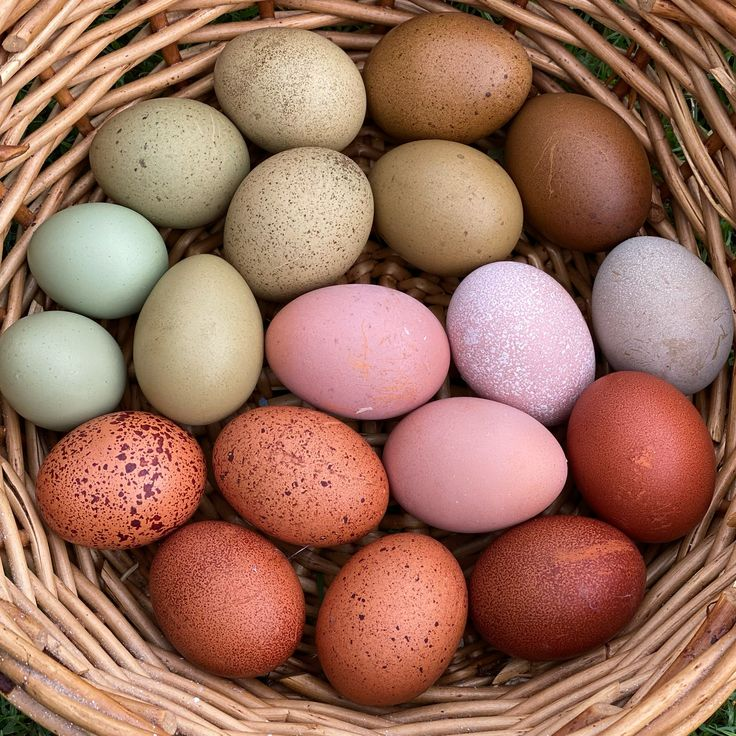
Yes, some breeds even lay blue or pink eggs. Because shell colour is simply a pigment that the hen’s body deposits on the shell during formation.
A white egg comes from a White Leghorn. A brown egg comes from a Rhode Island Red. That’s it. No nutritional difference, no safety difference, no quality difference.
But just because brown-anything carries the “healthy” perception, it sells. Brown eggs command a premium. Purely on… vibes.
So let us repeat: Don’t pay extra for brown eggs. They are not healthier. Period.
Second, yolk colour.
The internal colour of the yolk is now a marketing battleground. Welcome to the Orange Yolk Supremacy™.
Does it matter?
This is not an open-and-shut case like shell colour. And yet, a bit scammier.
So what determines yolk colour?
What the hen eats. Simple.
The orange colour comes from food rich in carotenoids. It’s the same compounds that give carrots their colour. Think marigold (gende ka phool) or maize. When a hen eats these, the pigment gets deposited in the yolk, and the yolk turns orange.
Now does that change nutrition? Kind of.
Because carotenoids are genuine antioxidants. So a naturally deeper orange yolk does contain more of these compounds. It is not meaningless.
But this is also the point: all the colour tells you is “this has more carotenoids.” Nothing else about overall nutrition. Nothing about whether the egg comes from an overcrowded battery cage or an actual free-range farm. The protein, the vitamins, the minerals… all the same whether the yolk is pale yellow or deep orange.

The problem is that the Orange Yolk Supremacy™ has the Brown Bread problem. It can be gamed.
Because while the orange colour can come from carotenoid-rich natural feed, it can also come from marigold extract dumped into low-quality feed (which still delivers some carotenoids) or from synthetic pigments like canthaxanthin.) that just colour the yolk with little to no nutritional value.
Either way, the yolk looks similarly orange-coloured on your plate.
It’s actually worse than the brown bread problem. Because the secret of the brown bread deception is visible on the back of the pack: you can see E150A (brown colouring agent) as an additive in the label, which is the caramel colour added to make maida bread look like whole wheat bread. No such declaration of what the hen actually ate is needed for eggs.
This is why we wouldn’t pay extra for orange yolks. Because you simply can’t differentiate between “good hen diet that happens to produce orange” and “bad hen diet with colour added.”
And while natural carotenoids have some value, the overall nutritional difference either way is small enough that it’s not worth basing a purchasing decision on.
Third, the “value added” segment.
Look at this brand.
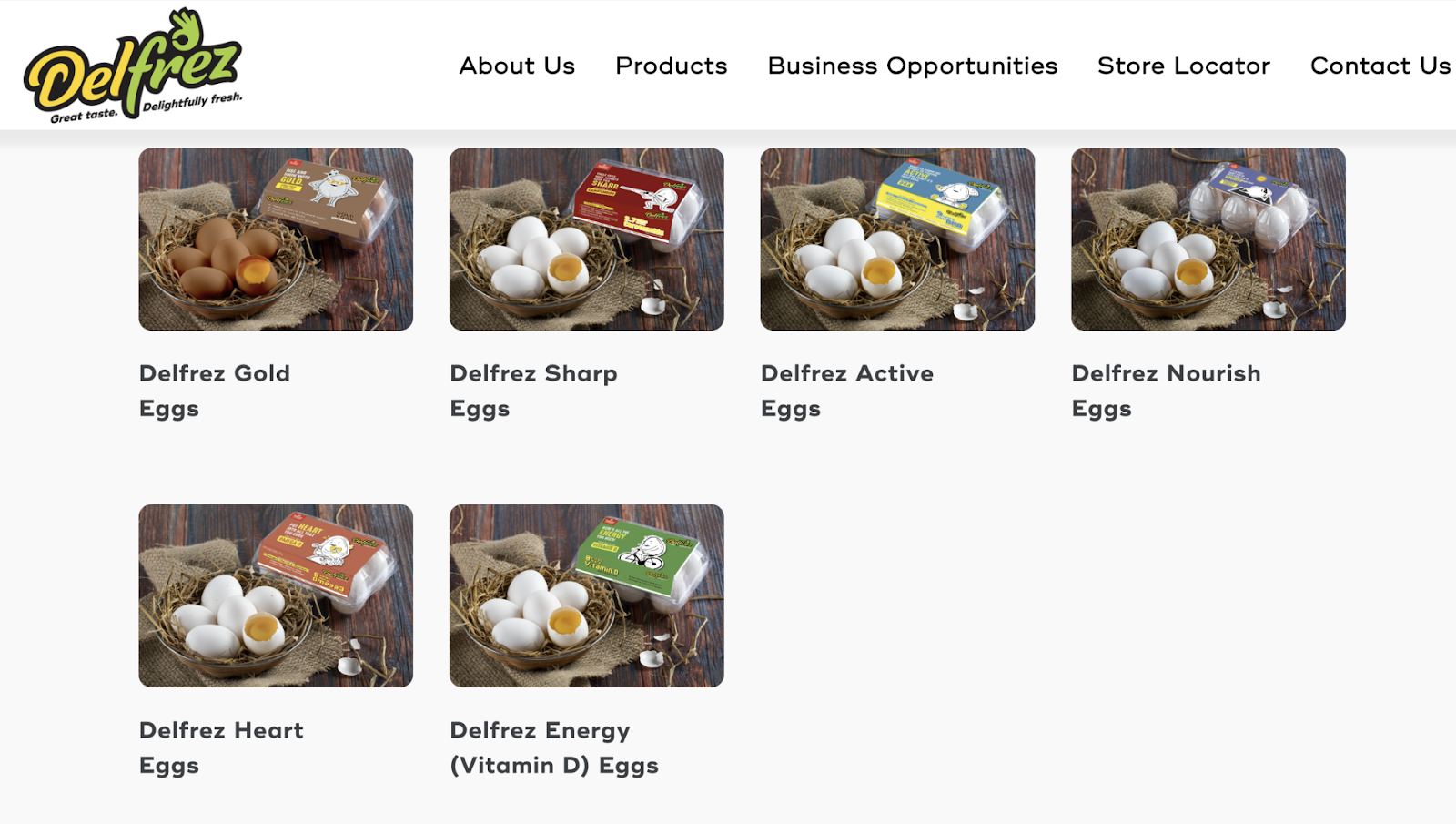
It has “Heart Eggs” designed for those who want “benefits of Omega-3 and Vitamin E for longevity and a healthy heart” and then “Active Eggs” designed for “those who have an active lifestyle and require additional nutrition.”
How fun. (We can now decide which body part or life function we want to optimise when making breakfast?)
Look, this is not just an egg industry problem. This is a wellness industry problem. Which is that you can fortify almost anything and make claims. But who is checking whether those claims actually matter?
So how does fortification work? Again, hen feed.
Say you want your egg rich in Omega-3. So you add flaxseeds to the hen’s diet, and the egg will be richer in Omega-3. This is real. What the hen eats genuinely changes the egg’s composition. Fortification is technically well-established and widely used internationally.
What’s not clear is whether a given brand actually did it, in what quantity, and whether the quantity even matters.
And even if they did: which kind of Omega-3? ALA from flaxseed is very different from DHA and EPA from fish oil or algae. A brand that doesn’t even tell you which kind is probably making a hollow claim.
Which again brings us to a simple point: standard eggs are already nutritious. Fortification is only a bonus. And if that bonus is claimed, it should come with evidence: specific nutrient amounts per egg, which form of the nutrient, and ideally a published lab report as evidence.
If you put all three things together, you will see what is happening here: extra nutrition is simply the wrong axis to pay a premium on. It’s either meaningless or unverifiable or just practically worthless.
The axis where brands can make a meaningful difference is in ensuring safety. Let’s talk about this next.
II. Pay for safety. Look at process.
There are two big concerns around egg safety.
First, antibiotic residue.
We covered this in Part One.
A short reminder. The problem is that while antibiotics are legitimately used to treat sick hens, their treatment requires strict withdrawal protocols, meaning any treated hen’s eggs should not be sold for at least 7-14 days, depending on the antibiotic, sometimes longer.
But there is no strong enforcement of this protocol. The system is opaque. And there is no traceability in the system, unlike in Europe, where every egg is stamped with a producer code.
What makes this especially concerning is the dominance of battery-cage farms in India, which by design increases disease spread and antibiotic use.
This is a systemic problem. And we must demand stronger enforcement from the government and more transparent disclosure from brands.
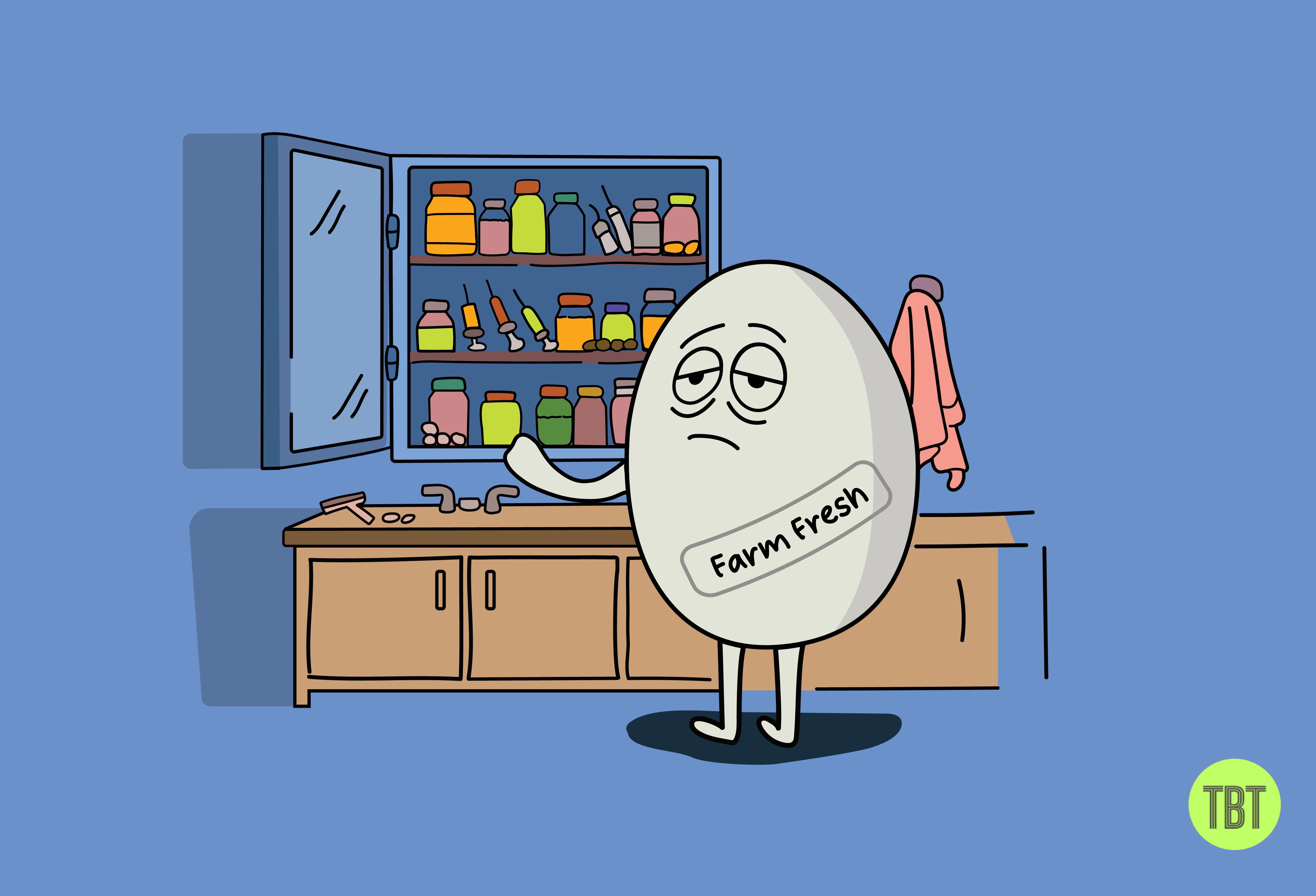
Anyone claiming “antibiotic-free” eggs should be able to answer: which farms do they work with? What are their withdrawal protocols? How do they verify compliance? At what frequency is lab testing done? Are reports public?
This is also one reason we’d pay a premium for free-range eggs. Not for extra nutrition, but because the conditions that drive antibiotic overuse in battery cages—overcrowding, rapid disease spread, whole-flock treatment—are structurally reduced.
Yes, this is an imperfect signal. Free-range doesn’t guarantee lower antibiotic use, but it correlates with it. And in a system with almost no signals, imperfect still beats blind.
But if a brand says “free-range,” ask for proof. See if they have photos and videos from farms. See if they have a credible certification. ‘Certified Humane’ is one—but their coverage in India appears small. Some brands even allow visits. The onus should be on them to show credentials, rather than asking us to just trust it.
Second, bacterial contamination.
This is about the egg on your plate being loaded with bacteria, especially Salmonella. Studies have detected Salmonella contamination in eggs and poultry environments in India, with some local studies reporting rates above 7%.
Reducing this risk is where brands can add legit value. Because this is primarily about the supply chain: how eggs are handled once the egg is laid. And this is also the most underrated part of conversations around eggs.
So first, let’s understand what makes an egg spoil.
See, an egg is a perishable food item. It’s not inert like a rock. It spoils. Its quality is simply a race against time. As an egg ages, its internal defences weaken, making it more vulnerable to bacteria that get through the shell.
The first safety factor is time. From the moment the egg is laid, the clock starts. The fresher the egg, the better. The longer it sits, the more vulnerable it gets.
The second safety factor is temperature. Heat makes an egg spoil faster, just like milk left on a kitchen shelf in a 40-degree Delhi summer. When it’s hot, bacteria multiply faster. In a fridge, they barely multiply, and the egg stays good for much longer.
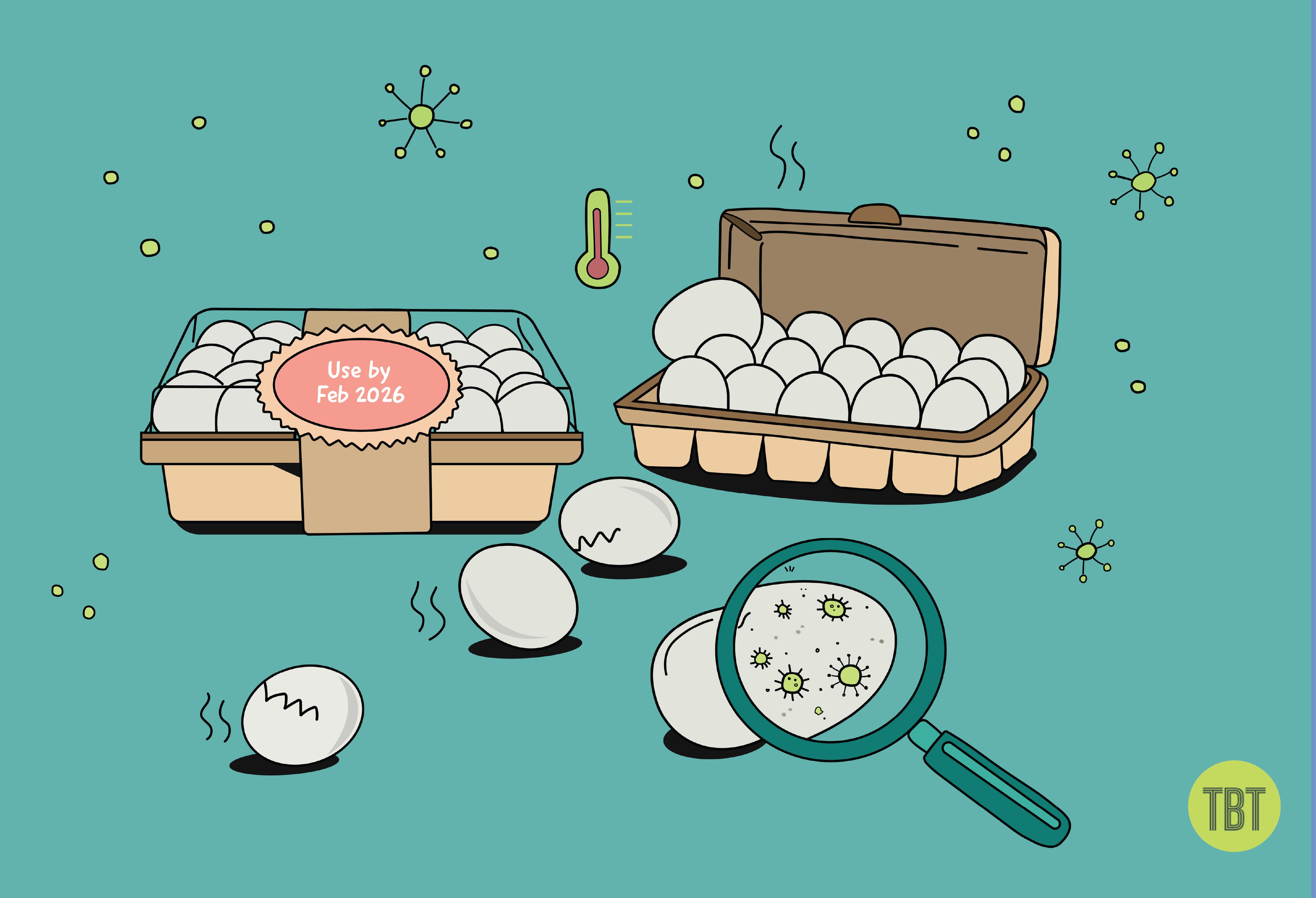
Now factor these two things into the Indian context. An egg travelling from Namakkal in Tamil Nadu—India’s egg capital, producing roughly 60 million eggs a day—to a kirana store in Kolkata. In an un-refrigerated truck. Through Indian summer heat. That journey can easily take 10–12 days.
That same egg, consumed within 3 days and kept refrigerated, is a completely different product.
India doesn’t have a large-scale cold-chain infrastructure for eggs. And for all the loose eggs we buy, we simply have no idea how old the egg is or what temperature it’s been through. Most unbranded eggs sit in open-air godowns or on hot retail shelves. And unlike vegetables, an old egg and a fresh egg look exactly the same.
So the single biggest advantage of buying a branded egg over a loose egg is simply… a date stamped on the box. That’s it. It’s the one thing that is verifiable and that lets you estimate how much degradation has already happened. It’s the minimum information you need to assess risk, and the entire loose-egg system denies you this.
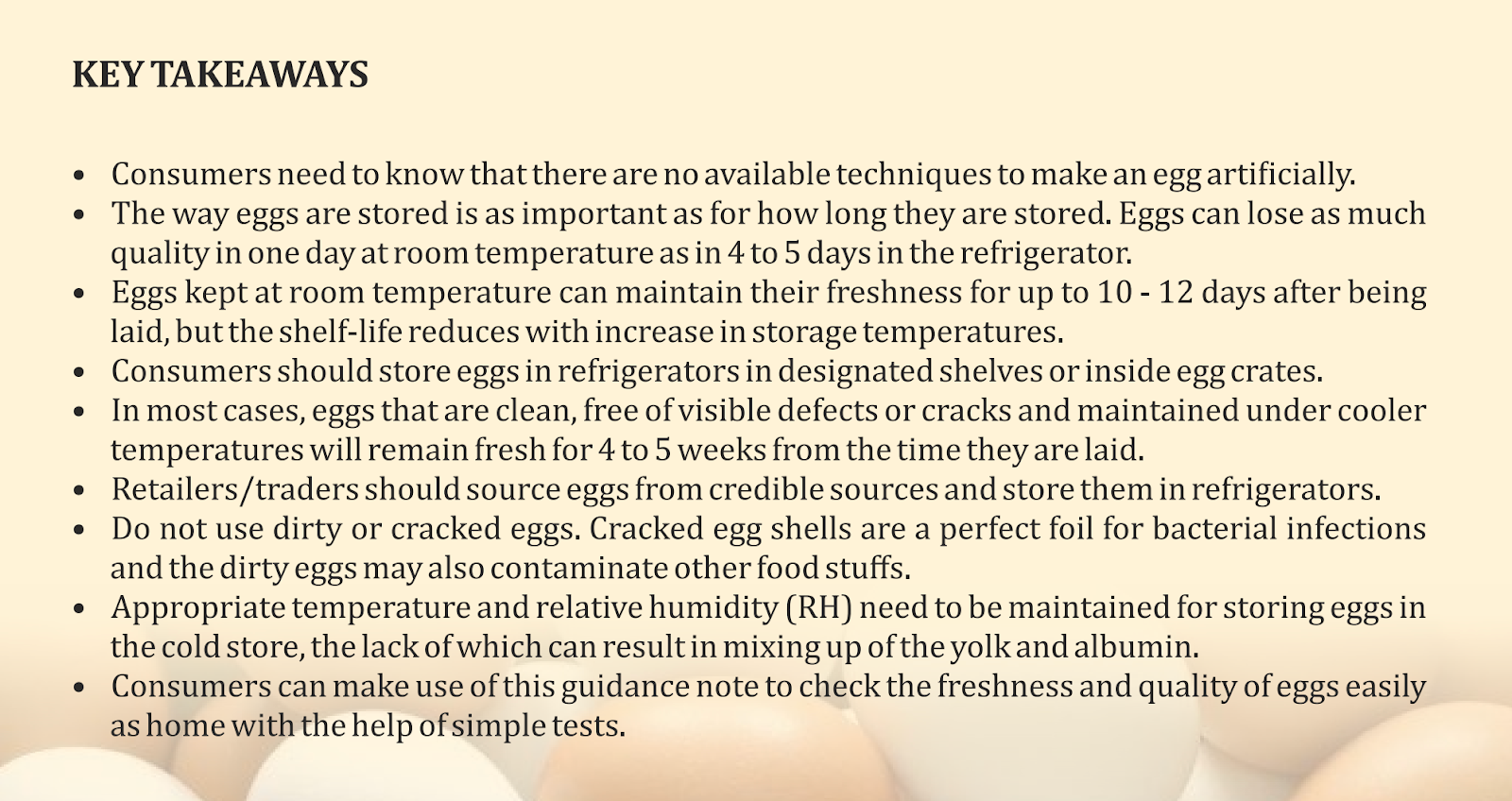
FSSAI’s own guidance says eggs maintain freshness for 10-12 days after laying at room temperature. Refrigerated, they stay good for 4 to 5 weeks.
So yeah, after all the noise—all the premium labels, all the manufactured complexity—the one verifiable, unglamorous, unsexy thing that actually matters for your safety and actually in your control is knowing when the egg was laid.
How boring. But it’s also the thing that actually matters the most. Buy fresh eggs.
So what are you actually paying for with branded eggs?
Not better nutrition.What you are paying for is process: systems that clean and sanitise eggs, run lab tests, and maintain traceability through the supply chain. In a food system where information is scarce, enforcement is weak and supply chains are long, a careful transparent process that tells us how an egg moves from farm to our home is actually valuable.
A brand that does this well—and is transparent enough to prove it—is worth buying.
And yes, once the eggs are home, a few simple habits help.
Refrigerate them (for the reasons discussed above). Avoid cracked eggs. Don’t wash eggs under running water (read more here). And trust your nose: fresh eggs have almost no smell. In a food system full of myths and missing information, this is one signal entirely in your control.
In 2018, FSSAI published a detailed guidance document on egg safety and quality. The key takeaways from the report are below.
That’s it. Let an egg be an egg.
PS: No, we’re not reopening the cholesterol debate here. We’ll cover that separately.
Here is a short feedback form to help us understand how we’re doing. Would you please share your thoughts? Link here. Thank you!