
On Systems I Still Don't Trust
Why I wanted an ADHD diagnosis, why no one complains at the hospital, and what happens inside an ICU

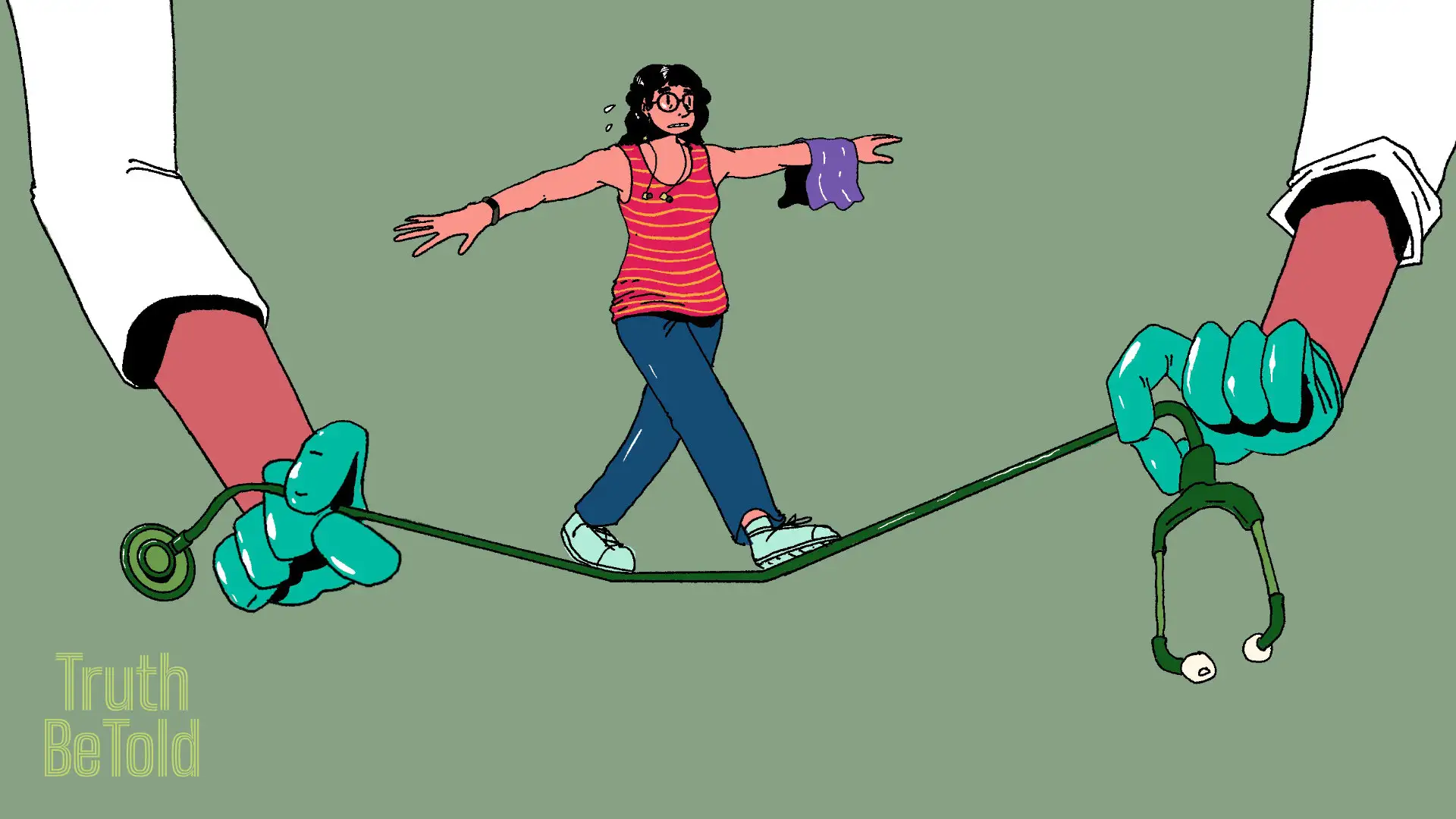
Illustration by Sharath Ravishankar
The most trustworthy source of food and
fitness journalism in the country.
Welcome to Truth Be Told, the food and health journalism publication published by The Whole Truth Foods.
Hello! This is Jaanvi Advani, and this is the first edition of our fortnightly curated picks, where our team and writers share what they’ve been reading, watching, and listening to. Today, it’s my turn.
As a reader-turned-team member of Truth Be Told, what brought me to this publication was a lack of trust in the systems that affect our health.
The right reading, coupled with trial and error, helped me build internal systems I could actually rely on—nutrition, exercise, sleep routines that seem to be working.
But lately, my reading has drifted toward what I still don’t trust or understand: the external systems. Especially medical care, the part we get thrown into despite doing everything right on our end. From diagnosis to treatment, it still feels vague, confusing, and at times, infuriating.
These three pieces brought me some clarity. Or at least, better questions.
I. On diagnosis. And when to seek help.
Five days. That’s how long I went, unable to read a single page without reaching for my phone. By the end of it, I was asking everyone I knew whether they thought I had ADHD. I took online tests. I wanted a diagnosis.
I wanted it not because I wanted treatment, but because I wanted an explanation. A label that would let me stop sitting with the discomfort of not knowing what was wrong.
That’s the revelation I took from Derek Thompson’s piece on over-medicalisation. Drawing on Irish neurologist Suzanne O’Sullivan, he makes the case that we’ve quietly shifted from using diagnosis as a path toward recovery to using it as an identity—a resting place.
He’s careful to acknowledge the other side, the genuine good that diagnosis does. But the question he leaves you with is uncomfortable: when our ability to detect problems outpaces our ability to treat them, how much detection is too much? The price of that vigilance, he argues, might be trading one kind of suffering for another.
Of course, sometimes we genuinely do need help. And that’s where the next problem begins.
Read it here.
II. Why going to the doctor sucks.
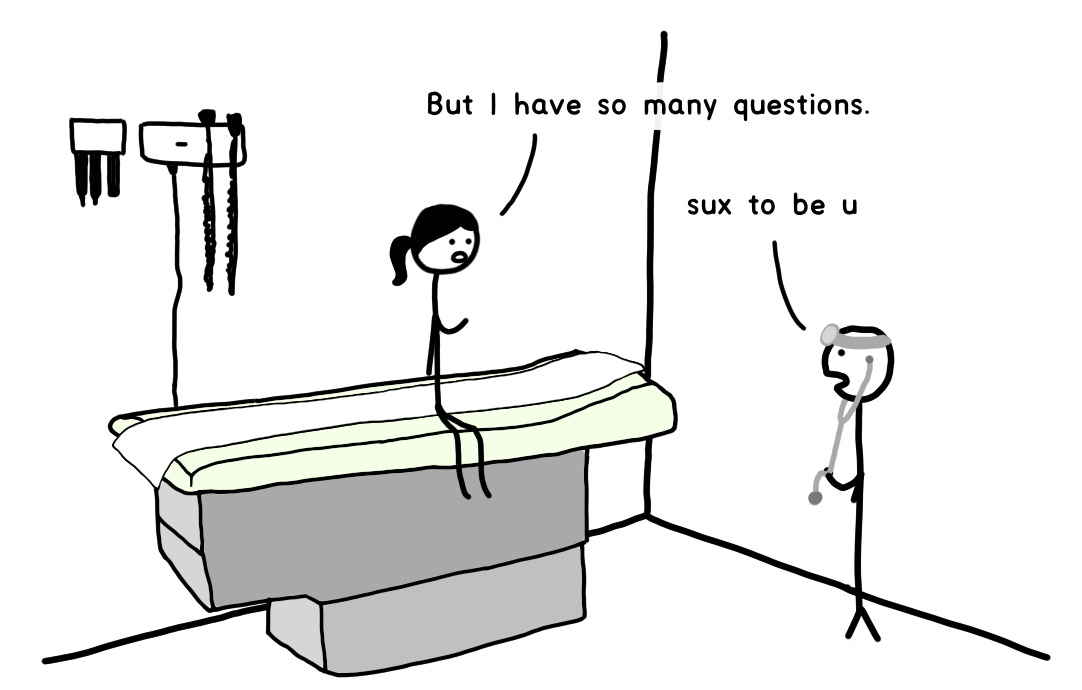
If you’ve done enough hospital rounds for a complicated illness, you know the drill. A 3 pm appointment that gets called at 5. A rushed two-minute consultation where you forget every question you meant to ask. A concern about medication that gets waved away before you finish the sentence.
What struck me, while going through it, was how little anyone complained. Because they didn’t expect any better from this service.
Which is why I love this piece by Wait But Why. It’s set in America, from a few years ago, and follows the writer’s wife’s experience navigating treatment for an autoimmune disease in a system that seems designed to test your patience more than treat your illness. It is, to put it plainly, top-tier complaining. With fun illustrations.
But the complaining isn’t just for laughs. It names, very precisely, all the gaps and frictions that make us avoid the doctor like a plague. The piece eventually moves into a startup idea born from that frustration—his wife and her business partner, also a patient navigating breast cancer treatment, decided to try fixing primary care themselves. That section gets into insurance details and business mechanics that may feel like a detour. (Stick with it, or skip ahead. Either way, the first half alone is worth your time.)
You’ll come away asking questions you’ve probably felt but never quite articulated. Why do we avoid going to the doctor? What makes the experience so gruelling? And does healthcare really need to test a patient’s patience this hard?
Read it here.
III. On Intensive Care. And everything we avoid thinking about.
Now we’re going to the deep end.
30% of people who undergo ICU treatment go on to suffer from PTSD. That’s higher than the 20% reported among war veterans returning from Afghanistan. If you’ve ever sat in the waiting room of one, that number might not surprise you. You know this place is mind-boggling.
This is a three-hour conversation on The Seen and the Unseen with Nitin Arora, an intensive care specialist practising in the UK. It’s long (but not as long as Grey’s Anatomy).
There is a lot here about the human machinery around medicine. How trained are doctors in actually communicating with patients and families? Who decides who moves up the organ donor list? When is it advisable to do less vs more?
And then the cultural layer: why is it so common for South Asian families to avoid forward-facing decisions about death? Why can’t we discuss something like a Do-Not-Resuscitate order without feeling like we’re inviting bad fate?
Nitin Arora moves between the systemic and the personal with real ease. He’ll walk you through the four pillars of medical ethics—autonomy, beneficence, non-maleficence, justice—and then tell you about the patient who decided to light a cigarette next to his oxygen cylinder and blew it up. The stories are sometimes tragic, sometimes absurd, and always told by someone who has clearly sat with both for a long time.
I’m recommending this because being anywhere near an ICU is one of the most intense experiences a person can go through, and most of us walk in knowing almost nothing about how it works or why. This conversation answers questions I didn’t even know I had.
Listen here (or any podcast app!)