The 'Hard' Is the Only Point of 75 Hard
I find it strangely hard to recommend this program. And yet, I would do it all over again.

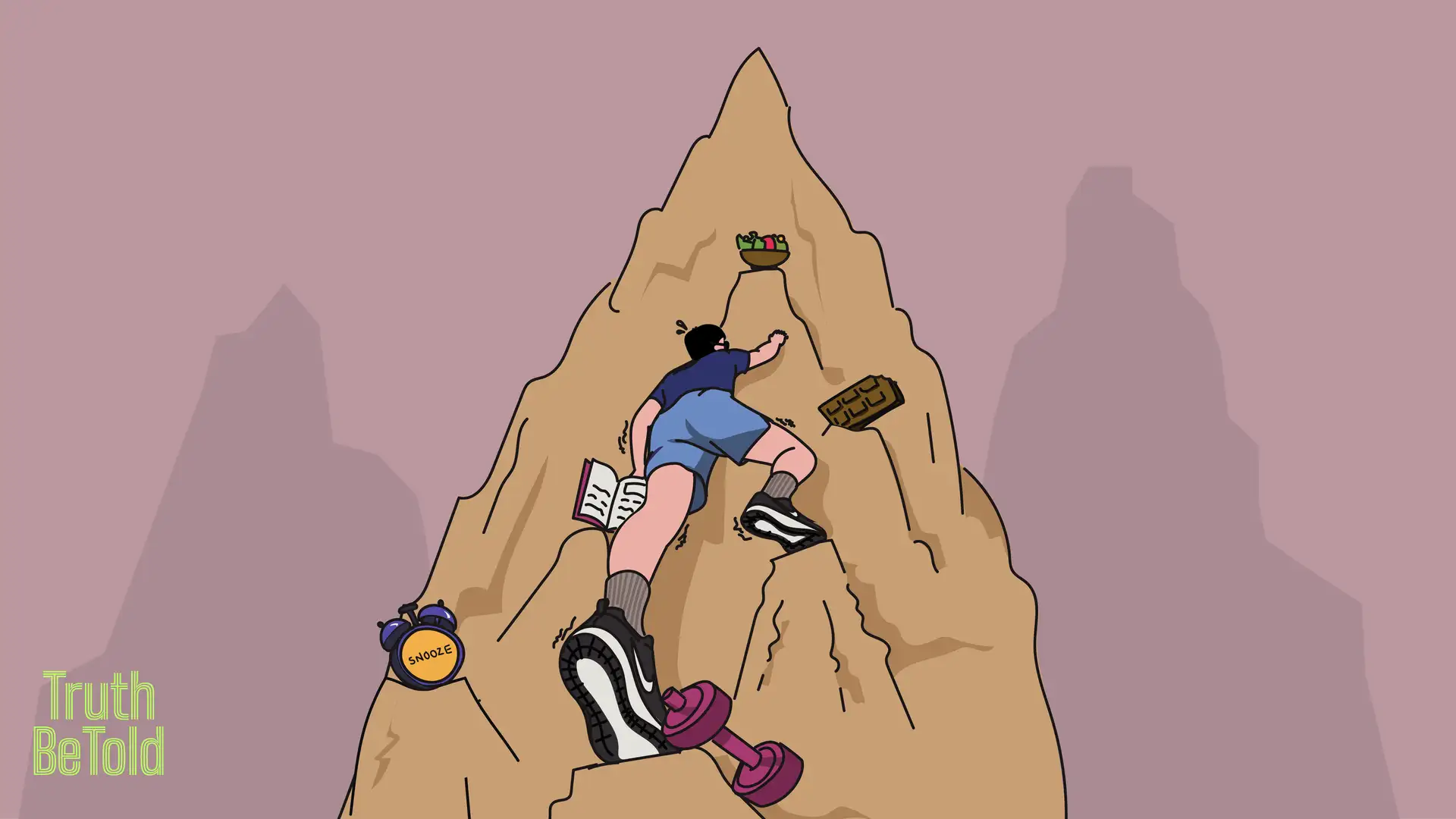
Illustration by Siddhi Bhandari
The most trustworthy source of food and
fitness journalism in the country.
Welcome to Truth Be Told, the food and health journalism publication published by The Whole Truth Foods.
Editor’s note: Hello, this is Samarth. Today’s piece is by my colleague Dhvanil Raval (D), where he writes about his experience of 75 days of consistency with the 75 Hard protocol.
Most of us know that specific day during a fitness program when colleagues suddenly notice a visible shift in your physique. That happened with D in one of our Tuesday Morning Meetings. I then learned he was doing this 75-Hard thing, and then, a few weeks later, when the program was done, I caught him at the lunch table and requested him to write this piece to share what it actually feels like.
This piece is a personal win for me because I have been pushing D to write publicly for more than a year now, and it starts with TBT. :)
D is an Entrepreneur-In-Residence at TWT, one of the OG members of the leadership team who built this brand, and currently leads the protein category team.
— Samarth Bansal (samarth@thewholetruthfoods.com)
I.
I decided to do 75 Hard the way most questionable life decisions are made: on a whim, in an airport, while recovering from a food coma.
For those unfamiliar, the premise is absurd in the best way: follow five rigid rules for 75 straight days. No breaks. Which means if you slip up on Day 74, you restart from Day 1.
These are the five rules:
- Follow a diet. Any diet—just pick one and stick to it. No alcohol. No cheat meals.
- Work out twice a day, 45 minutes each. One of these must be outdoors.
- Drink a gallon (~4 litres) of water daily.
- Read 10 pages of a non-fiction book.
- Take a progress photo every day.
I had heard of 75 Hard before—mostly from influencers and YouTubers. The body transformations seemed wildly good. I had watched this content in the same vein as I saw the Olympics—with admiration and awe, but absolutely no hope of emulation. And yet, on the 27th of December, 2025, I ended up committing to it.
I had just spent five days doing what one does in Hong Kong—roaming the streets, inhaling dim sum, and developing a deeply personal relationship with dai pai dong (Hong Kong’s old-school street food joints). As I waited for my flight back to Mumbai, my tongue reeled from Sichuan peppercorn, and my head buzzed with guilt. In that state of bloated contemplation, several threads converged into one dramatic conclusion: I am soft.
There was guilt from the food binge, obviously. There were also recent breakthroughs in therapy, which left me feeling uncomfortably self-aware. And the prospect of a demanding year at work that I knew would require a version of me that didn’t currently exist. I am not doing enough hard things, I told myself.
Something in that airport moment got to me. Maybe it was the therapy. Maybe it was the guilt. Maybe it was the knowledge that my wife, newly pregnant at the time, was being advised by the combined wisdom of WhatsApp forwards and well-meaning aunties to eat only home-cooked food—which meant not going out for 75 days would actually be acceptable at home. Maybe it was that Mumbai’s weather officially enters its Best Behaviour Phase from late December to mid-March, making outdoor workouts less of a punishment.
Or maybe—and this is the part that should serve as a cautionary tale about social media consumption—I simply hadn’t done enough research to know all the reasons I shouldn’t do this.
So, I took the plunge. In a fog of poor research and mild delusion, I committed to 75 Hard.
This is an honest account of how those 75 days actually felt, and what the other side felt like. Fair warning: I find it strangely hard to recommend the programme itself, and yet, given the chance, I would do what 75 Hard represents all over again. I’ll let you sit with that contradiction for a while; I certainly have.
II.
Full disclosure: I made two modifications that purists MAY consider heresy. First, I dropped the “non-fiction” requirement: I just read 10 pages of anything I wanted. Second, I played fast and loose with the progress photo rule; it felt less like discipline and more like a part of the programme designed to feed your Instagram.
In the first couple of weeks, the space between my workouts seemed to shrink to nothing. I was either in a workout, planning the next one, trying to squeeze in enough sleep before the morning session, or too sore to form thoughts about anything other than the workout I had just finished.
I was planning an early exit from the office to accommodate an evening workout, since I had a flight in the morning. I was planning two workouts back-to-back in the morning because I had to attend a party in the evening. The workout was me. I was the workout.
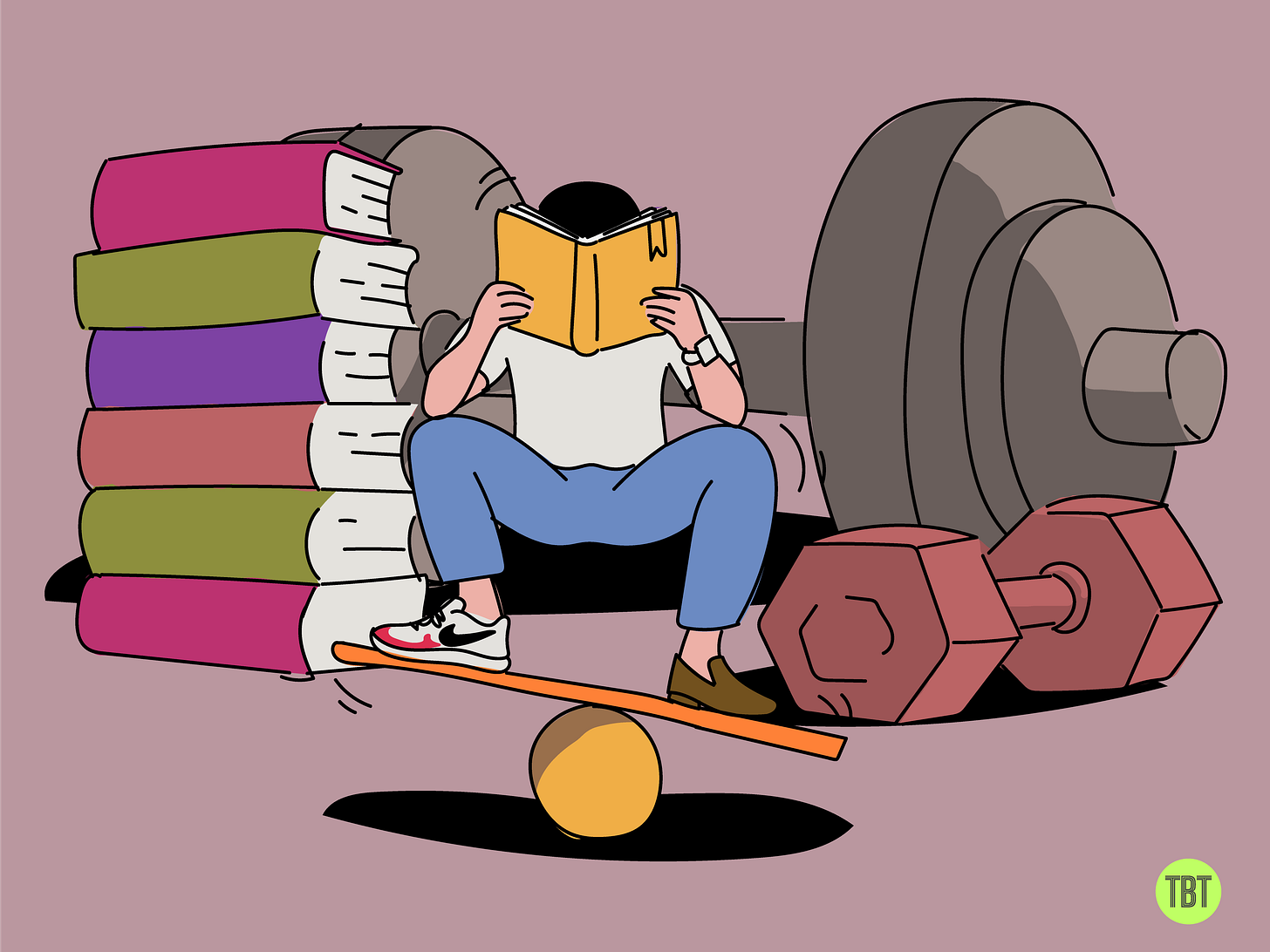
Illustration by Siddhi Bhandari
And this strange, relentless grind is precisely why 75 Hard is hard.
Crushing a single session is easy. Crushing two a day is slightly harder. But when you try to do this for 75 consecutive days, fate and nature themselves begin conspiring against you—even more so when you pair it with a diet.
My cooks became unintentional victims of my new consistency. Their days off had always been when we ordered in, and now that option had vanished. They protested by taking actual days off, which meant my diet, against my will, evolved into something aggressively salad-forward. If the founders of Feel (Herbivore Farms), Salad Days and Harvest Salad Co. ever read this, thank you.
Family threw in their bit by summoning me to weddings. I smuggled protein powder sachets into these events and became a source of deep frustration to my fufajis and masis, who found themselves stuck behind me in buffet lines as I wrestled with the task of loading my plate with ‘green salad’. (It is so goddamned frustrating to pick up these thinly sliced frill-cut pieces of carrots and cucumber, because caterers give ‘tongs’ to pick them up! You know the ones I’m talking about? Those tongs are how they choose to insult you because you are choosing raw vegetables over their magnum opus, the analogue-Paneer Lababdar.)
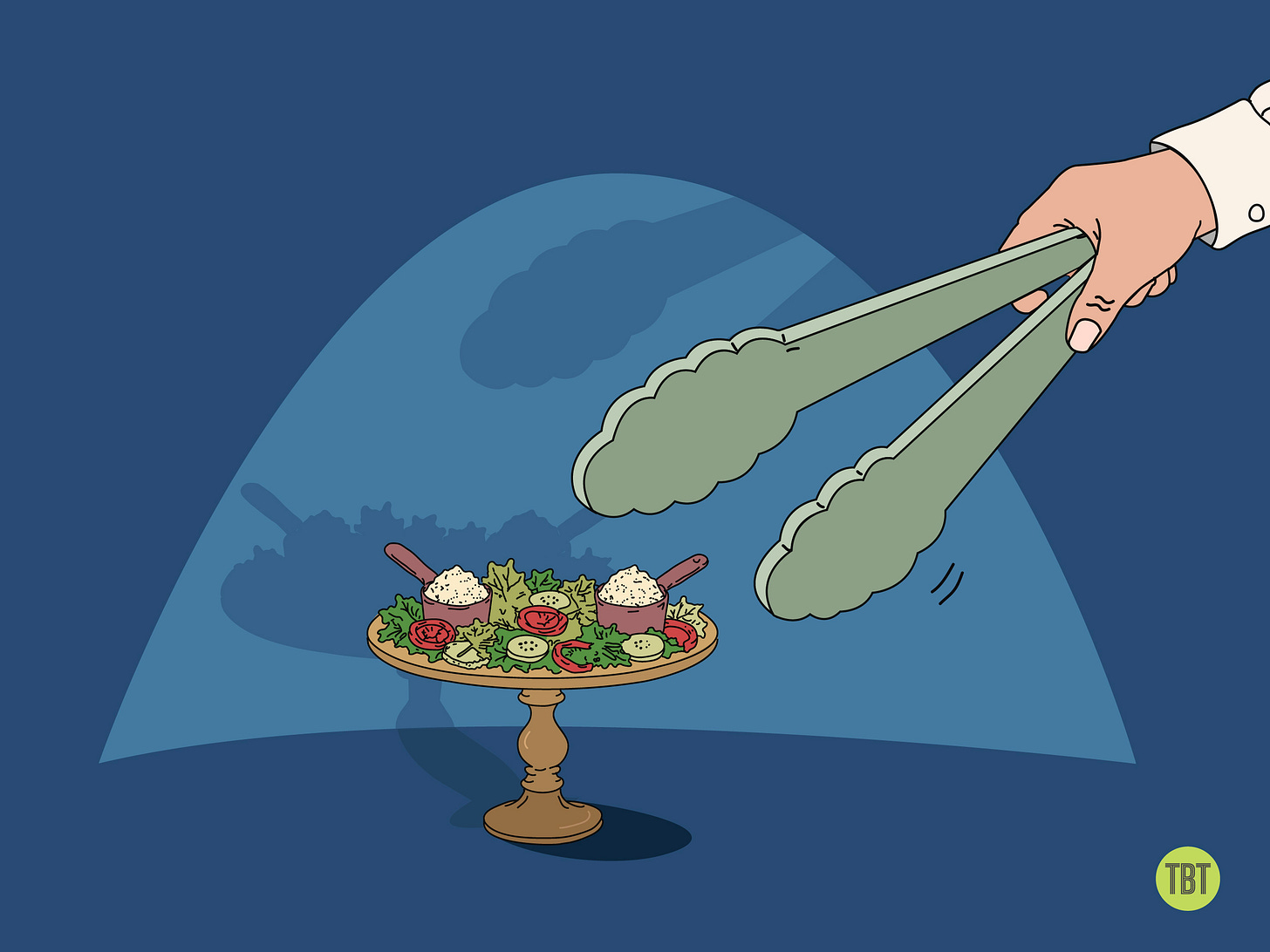
Illustration by Swaranjali Wadhawan
Whether it was colleagues at work, my team with whom I head out once a month, or friends I went out with and watched in quiet envy, I must have heard some version of, “This is a bit much, you must really hate yourself,” at least a hundred times. Some said it with their eyes or gave me a look. Others have been my friends longer, so they simply said it to my face. I shrugged some off, sighed at the others, or returned the death-stare depending on the state of my endorphins.
Even my home infrastructure joined the resistance. After a workout, I found no hot water in my bathroom; the geyser fixture had collapsed! When you are already carrying the weight of relentless consistency, these small overheads can really weigh you down. I bathed in cold water for three days—thanks, Bombay winters—because I couldn’t summon the energy to fix the damn thing. I told myself (rightly so) that cold showers are good for sore muscles anyway.
And then, somewhere in the unremarkable day of the third week, the conspiracy switched sides. The body I’d spent a fortnight fighting—sore, sleep-starved, one salad away from open mutiny—decided to come around. The grind didn’t go anywhere. It just stopped being a sentence I was serving and started being mine.
I worked out at Cult, and the workouts became the single most interesting part of 75 Hard. I loved the high of breaking my own strength PRs: a 62kg clean and press, a 20kg single-arm chest press for 8 reps, a 40kg barbell front squat for 12 reps, and a 20kg single-arm racked lunge for 12. Plus, I ran outdoors for the first time in nearly 2 years and clocked my fastest 5K (ever) in around 31 minutes. My resting heart rate dropped to 55.
Food got even better. By Day 40, my appetite itself seemed to have quietly shrunk, and cravings had all but disappeared. I had had no sugary beverages or desserts, no deep-fried food, and no alcohol. And now, seeing the 4 PM order of Gulati’s at the office did little to weaken my resolve.
I adjusted to roughly 100 grams of calculated protein intake daily, with non-protein foods contributing a little extra. I unwittingly added a lot of fibre through fruits and salads. Consequently, I experienced approximately 40 consecutive days of the best bowel movements I have had in recent memory. (You’re welcome for that detail.) By Day 60, I genuinely felt I could do this indefinitely—with the occasional break to appease friends and let my body recover.
And of course, I lost weight. I started at 86.2 kg and finished at 81.1—a solid 5 kg of net loss. The actual fat loss was probably more, because I was fairly certain I had gained muscle along the way.
Pro: I finally fit into a pair of jeans with a 32-inch waist.
Con: Every airport security check has been slightly frightening since then. I am beginning to realise that CISF has an equally good sense for loose pants and bomb-making material—they reset the intensity of frisking quite professionally.
III.
When I emerged from these 75 days, I felt like I was on top of the world. I wanted to preserve every aspect of this new life and tell everyone I knew.
But after finishing the program and doing proper research before I told the world about it, I discovered that most of 75 Hard actually lives in the darker, gloomier corners of the internet—in the ‘manosphere,’ as Gemini helpfully described it—rather than the fuzzy, motivational territory where I had first consumed it.
Its creator, Andy Frisella, is a supplement company CEO, podcast host, and self-described “CEO of Hardness”, whose content sits uncomfortably deep in the ecosystem of alpha male motivation. In 2024, he ranted about how women shouldn’t be police officers. He has since apologised, then un-apologised, then apologised again, as if public statements were a video game with infinite respawns.
Truth be told, health experts are ‘not fans’ of 75 Hard. The programme far exceeds recommended physical activity guidelines and provides little scope for muscle recovery. The gallon-of-water rule raises concerns about electrolyte imbalances, and the rigid, all-or-nothing structure may do more harm than good for people without a strong fitness base. Doctors urge caution for those with joint problems, heart conditions, no exercise background, or a history of eating disorders. (Luckily, I had none of these preconditions.)
In short, the programme is not evidence-based, not medically endorsed, and was invented by a man whose primary qualification is owning a supplement company and having strong opinions about everything. Sigh.
So yes, I am fully aware that this wasn’t the smartest regimen to follow. And yet, I did. And now that I’m done, I feel absolutely amazing.
This feeling is rare. It is happiness and contentment wrapped into one, with a beautiful contradiction at its core. A feeling of joy, but one that came from letting go of so many simple things that gave comfort and joy.
The dessert after dinner. The drink with friends. The freedom to skip a workout because you’re tired. Small stuff that we take for granted. I gave all of that up for 75 days. And the high from having done so lasted for days after I finished.
And what I learnt is that 75 Hard is not actually a fitness programme or a weight-loss method. It is just... hard. And I suspect that’s the whole point.
We rarely do difficult things without a reason. We push through brutal hours when we are decently good at something and want to refine it, like artists adding minor details. We endure discomfort when the consequences of not enduring are worse, like working harder to submit that project before a deadline. Hardship, in adult life, almost always comes with a payoff attached, or a punishment avoided.
But 75 Hard has no external stakes. Nobody is checking. There’s no prize at the end, no certificate, no medal. If you fail on Day 74, nobody knows but you. If you succeed, the world remains largely indifferent. It is difficult, but without consequences.
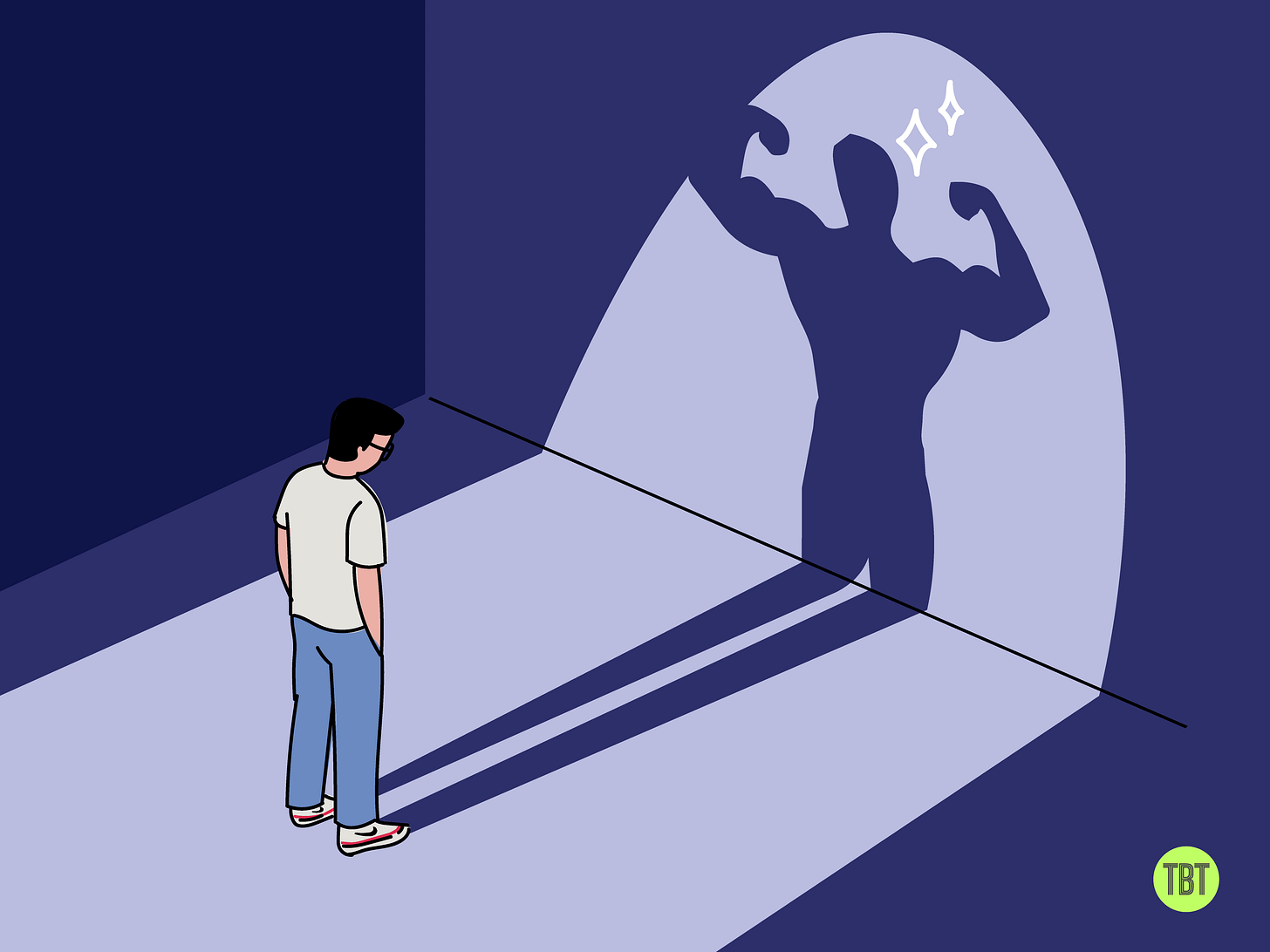
Illustration by Siddhi Bhandari
There is something clarifying about doing something like this when nothing is on the line. When the only consequence of failure is your own knowledge of it. When the only reward for success is the private fact that you did it.
I will leave it for you to decide if you want to get on a non-evidence-based program like 75 Hard. But I do have one recommendation: go out there and do a genuinely hard thing with nothing on the line. And push yourself to finish it when no one else will care if you don’t.
And then, when you have crushed it, let’s sit together and compare notes. Did it feel amazing? I am betting it did.
For all I know, we’re probably still soft. But I’m a slightly different kind of soft now. The kind that knows what it feels like to hold a line for 75 days when the only person keeping score was me.
========================================================================