
To the Girl Who Apologised for Everything
Inside the safe space of therapy, I traced a lifetime of guilt and recovered a voice I had learnt to silence

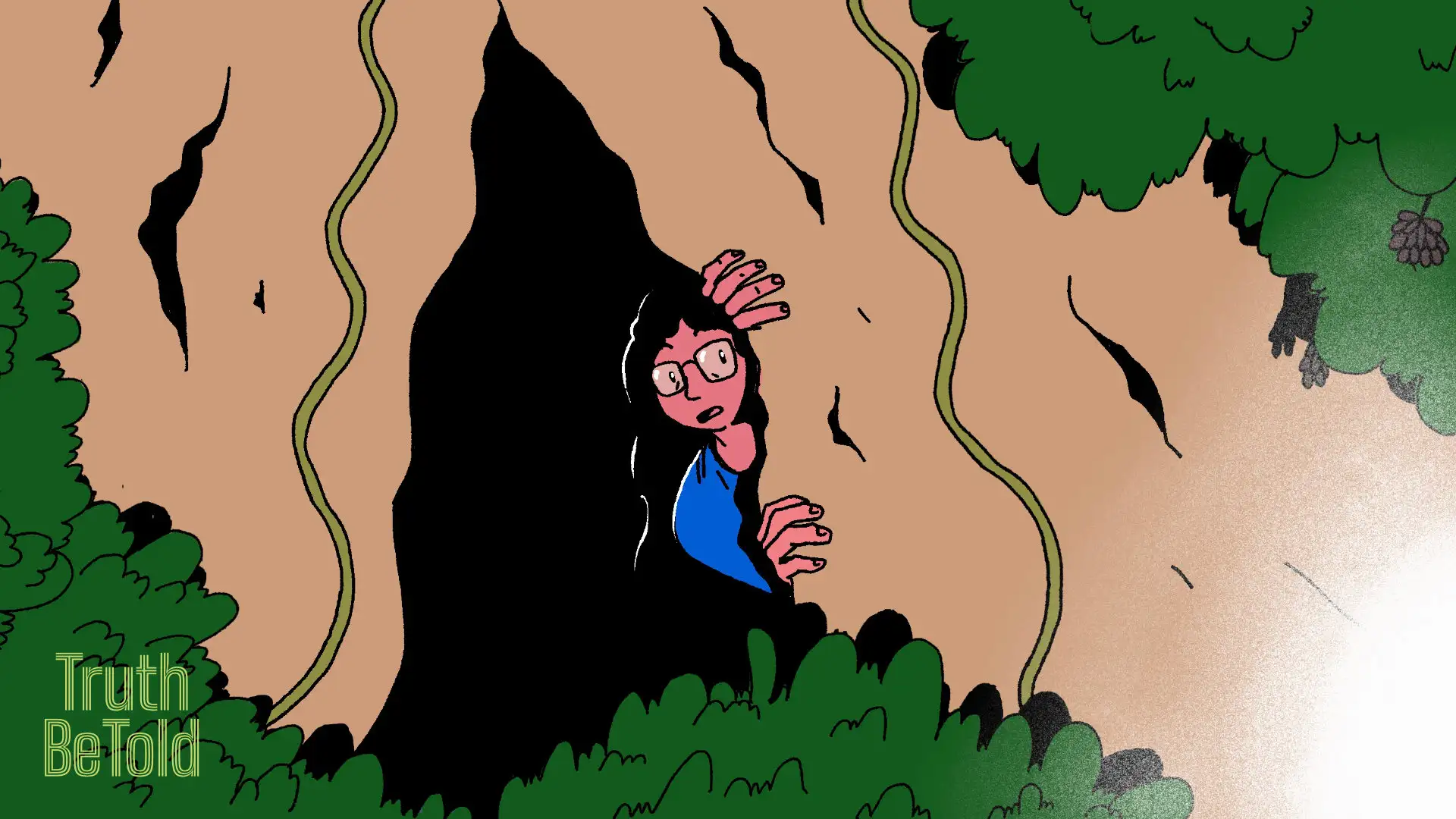
Illustration by Sharath Ravishankar
The most trustworthy source of food and
fitness journalism in the country.
Welcome to Truth Be Told, the food and health journalism publication published by The Whole Truth Foods.
Editor’s note: Hello, this is Samarth. Today’s piece is by Ishika Bansal (bansalishika215@gmail.com).
This piece is close to me for two reasons.
First: Ishika, 25, has penned a deeply personal account of how therapy helped her heal in 2025. She shows why therapy is not the same as talking to a good friend, and how it can reveal things about yourself that you cannot see.
Second: she is my sister, and I am so damn proud of her for finding the courage to write this (which also made it one of the hardest pieces for me to edit).
It’s a long piece, and I hope readers can feel the rawness of her experience through her words. Do read and share. For any thoughts or feedback, please write to me at samarth@thewholetruthfoods.com
— Samarth Bansal
I.
In January 2025, while living at home in Delhi, I felt like I was on the ocean floor with no light around.
The two people I loved were not getting along. Things at home were emotionally difficult, my personal life felt unstable, and professionally I was completely stuck. Every part of my life asked something from me at once.
I tied my self-worth to my work, felt the need to be productive all the time, and tried to manage my own emotions and everybody else’s emotions while slowly losing any sense of what I wanted.
I was anxious all the time. My entire life felt like a problem. I was constantly firefighting. All I was doing was reacting, surviving and moving to the next crisis. Any moment of calmness felt like toofan se pehle ka sannata.
My anxiety entered my body. I felt dizzy from the stress. There were times when my resting heart rate would shoot up to 150 or 160, and my chest carried a knot that would not loosen. I felt physically, emotionally and mentally sick, as though my body was absorbing everything I could not say.
I started preparing for the worst. I believed people would become tired of me if they knew the real me. I used to edit my words and actions in front of everyone. I was terrified that asking for too much would make people leave. So I kept saying I was fine and continued functioning as normally as I could while going further into the ocean, until I could barely see any light.
I believed I did not deserve love unless I earned it, rest unless I exhausted myself, and I didn’t even feel entitled to my own pain because I thought somebody else always had it worse.
When something bad happened, all I could think about was how I had ruined everything. What did I say? What should I not have said? What should I have done differently? How could I fix this?
I was so tough on myself every second of the day.
On 3 February 2025, I told my friend:
“My emotions are too much to handle for me and things are just getting harder. It’s not a good thought but I know things are going downhill from here.”
I had so many emotions in me that I knew I needed help. I felt deeply alone, even though my friend and my brother were there for me in ways I will always be grateful for. Their support made things more bearable, but it could not immediately undo what I believed about myself.
And so, on 4 February 2025, I started therapy. Nobody suggested therapy to me. I already knew I needed it because I had been in therapy before. I recognised the feeling of reaching a point where managing everything by myself was no longer working and I did not know what else to do.
II.
Just because I had done therapy before didn’t mean it was easy to start again. The first few sessions (still) feel awkward because you are paying a stranger to listen to your problems, including problems you might not really want to address. And then, you wonder: why trust this stranger?
What if they judge me? What if telling them about my feelings only makes it worse?
Such thoughts are common during early sessions. You do not know how they think. They do not yet know what your silence means. You may not know where to begin because there is too much to say, or because you have spent so long suppressing it that suddenly you cannot find the words at all.
So before my weekly sessions, I would sit with my diary and try to remember what I wanted to tell her. Without it, I often blanked out. I could spend an entire week feeling too much, but the moment the session began, I would suddenly struggle to remember what had happened or why it had affected me.
My therapist told me that this happened because my nervous system was protecting me from all the pain I was going through. So, writing helped me keep track of the moments that had stayed with me and the feelings I had not been able to understand. It also stopped everything from becoming too overwhelming once I joined the call.
Some days I came with pages of thoughts. On other days, preparing felt impossible. I had done nothing, written nothing and did not know where to begin. All I had was tears to shed. On those days, she took the lead.
The single most important thing throughout these sessions—and the reason they helped despite the strangeness of it all—is feeling safe. The sessions are not supposed to feel like a place where you are judged. I think being a natural yapper made talking relatively easier for me once I began, but the real reason I could speak was that she felt like the only safe space I had.
With her, pouring my heart out did not come with consequences. Unlike in my daily life, I did not have to worry that someone would become angry, misunderstand me, or use my emotions against me later. I did not have to soften every thought before saying it. I did not have to protect the person listening from what I felt. For one hour, I could speak without calculating the damage. That is what slowly began untangling my emotions.
III.
It was March, a month into therapy, and things didn’t magically change just because I had attended a few sessions. I knew from the past that the first few sessions were about setting context. My therapist needed time to analyse my personality traits, my problems, and to decode what we needed to work on.
I gave her a map of my current life—my family, my profession, my history with mental health—while I was still lost somewhere inside it. It helped that I didn’t have to frame things in a timeline format. It was okay for me to be all over the place about some things, and she always had follow-up questions wherever needed to fill in the blanks.
A month in, I realised being at home in Delhi was not helping. There was this one session where my therapist told me I really needed a breather.
At first, I thought this meant running away from my problems. But that’s not what she meant. She told me it meant taking a step back, breathing and then fighting back.
I understood the difference. I needed distance. In all this, I had a lifeboat sitting in my corner that my therapist helped me see: my brother. The person who has always been in my corner when everyone else has made me believe I don’t deserve anything.
So I decided to go live with my brother in Mumbai. Low-key, we both thought this would last two weeks. I went with a small suitcase, a few pairs of clothes and no real plan.
It was then, on the way to the airport, that I did something I never had before: I went to the wrong terminal. It sounds like a small mistake, but for me it was a red alert. I was so used to travelling and taking flights that this “small mistake” made me realise how deep into the water I was. I had forgotten how to pay attention to small, basic details.
And so, on my flight, I wrote to myself.
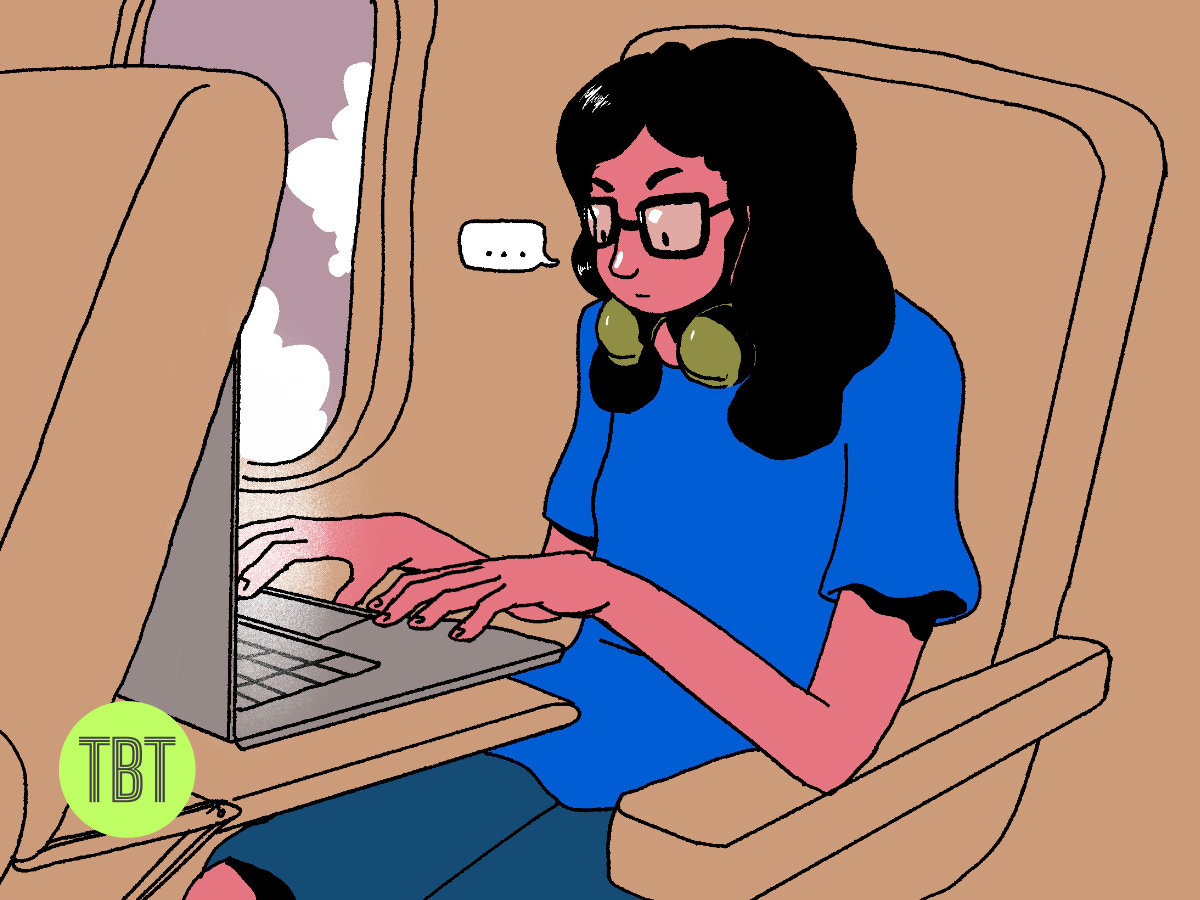
Illustration by Sharath Ravishankar
"Dear Ishu,
Things are not the best right now. Things are shitty, things are not going as per the plan and it feels like life is taking over you. It’s overwhelming. I get it. I understand you. But this message is for you to know that you are not alone. I am your inner voice. I know you better than anyone else. I want you to know that things are going to get better because you deserve better. You are a strong woman.
I know you don’t think you are one while this letter is being written, but just trust me this once. Mumbai is where you need to go. That city has always empowered you and embraced you in ways no one can explain. It has the power to fill that emptiness in you."
And so it did. The physical distance gave me some room to hear myself. While my personal life was on fire, I had almost no confidence left in my professional life either, but my brother kept pushing me to move anyway: send the email, write to that person, reach out, follow up, apply. I did not feel capable, but he kept nudging me into doing the next small thing until I started doing it myself and finally found myself a job.
And that’s how the supposed “two weeks” in Mumbai eventually turned into a year. The city would play a big part in my healing.
IV.
I started with learning the basics, similar to how it is in swimming, where you learn to float first.
In the first four months, my therapist told me to write about what I felt when I was overwhelmed. I was already so emotionally exhausted that I didn’t do it. She didn’t force me to do it. But gradually, as my relationship with therapy became consistent, I understood that what happened outside the session was as important as the conversation inside it.
Some exercises were structured. Others were things we practised together during the session because she knew I was not always good at sitting down and writing about my feelings on my own.
One thing I struggled with a lot was understanding where my responsibility ended and somebody else’s began. I would get overwhelmed by my mother’s emotions, for example, and immediately feel that it was my job to make sure she was not sad.
Intellectually, somebody could have told me a hundred times that I was not responsible for another adult’s emotions. But understanding that sentence and actually believing it are very different things. So we kept returning to it.
At first, I had to consciously remind myself of that. I could care about someone. I could listen. I could explain myself. I could try to make a situation easier. But I could not control how another person felt about my decisions, and their sadness did not automatically mean I had made the wrong choice. It took months of repeating this in different situations before it slowly became intrinsic. I won’t say it’s fully ingrained in me now; I am still practising this.
We also rehearsed difficult conversations. Before my breakup, I spoke to her about how I wanted to handle the conversation and what I wanted to say. We did the same when I had to tell my mother that I wanted to live in Mumbai, and later when I was preparing to tell her that I wanted to resign from my job.
These were conversations I would normally enter already frightened of the other person’s reaction. Rehearsing them helped me separate two questions that I had always treated as one: What do I want to say? and How will the other person react to it?
I could prepare for the first. I could not control the second. My sessions helped me understand this, which also partially reduced my overthinking.
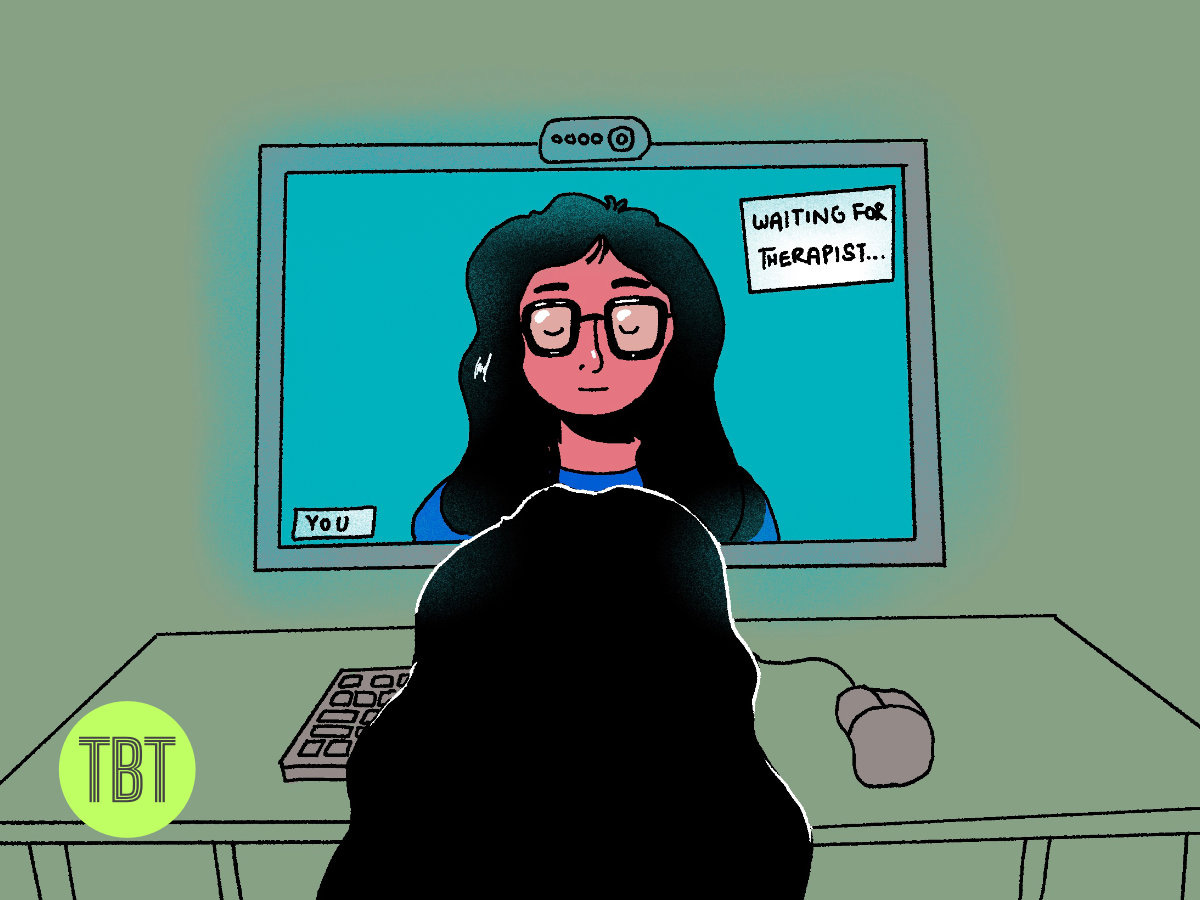
Illustration by Sharath Ravishankar
V.
One of the biggest pieces of homework were the reflections. I had told my therapist about the knot in my chest, the discomfort and the way it had become so overwhelming that I could not concentrate on anything.
She told me to process the feelings by writing and reflecting on them. Even though we took baby steps, it felt terrifying.
She asked me to start by decoding my childhood. I had to go through old material—chats, emails, anything else I could find from the younger me—to understand if my apologetic nature and other traits in my personality stemmed from deeper issues.
After procrastinating for three whole weeks, I decided to give it a try. I deliberately waited for daylight because I knew the work would feel heavier at night. I sat in one corner of the house and went back through messages I had not read in years. And had chills as I read them.
One such moment was about an inter-school tennis match. I wanted to participate in it, even though it was around two weeks before an exam. My family wanted me to focus only on studying. A call was made to the teacher, and I was told I would not be going.
What hurt me years later was not only that the decision had been taken away from me. It was seeing how I had responded.
I did not say “You should have spoken to me first.” Instead, I apologised at least ten times. I promised I would never do something like that again. I saw how deeply ashamed I had felt. I believed I was a bad daughter for wanting something without first “giving” good marks in return.
Another memory was a birthday party. A friend had invited me, and when I asked for permission, I was initially allowed to go, until it became clear that no family members would be attending. Then I was told I had hidden that detail just so I could go out.
It was only a birthday party. But something much larger settled inside me that day. I stopped asking to attend outings until I graduated. Nobody had to say no again because I had learnt to say no to myself first. I began rejecting my own wants before anyone else had the chance to.
Beneath both these memories was a larger debt I thought I was carrying. Boarding school was expensive, and I knew my mother was lonely while I was away. So I believed something exceptional had to come out of me in return: good grades, trophies, a good university and a successful career.
I had turned my parents’ decisions and sacrifices into a loan against my own life. Every want felt like an additional expense. Every mistake felt like a failure to repay them.
Looking through those messages, I realised the pattern was not simply that I apologised too much. I had learnt to prevent conflict by wanting less. I tried to repay love through good behaviour, good grades and gratitude.
Even as a child, love, freedom and pleasure had started feeling conditional. I believed I had to return something of equal value before I could ask for anything.
I cried for about an hour. It did not make me feel better. It made me understand the weight I had been carrying all these years. I was mourning my younger self, who had been so harsh on herself without even realising it.
Then, while sobbing, I wrote a letter to her. Sharing an excerpt here.
"You don’t have to be perfect for me to love you and care for you. I like you the way you are. You are already doing so much more than you are supposed to. 9 years later, I want to promise you that it took me almost a decade to realise I deserve better. But now that I have realised it, I want to promise you young girl, I will work very hard to heal you and the pain you went through. The pain no one ever saw in you."
Writing that letter gave me a different relationship with the person—the younger me—who had lived through it. For the first time, I was not judging her for being weak, obedient or overly sensitive. I was looking at her as a child who had tried to survive by becoming easy to love.
It was therapy that gave me the distance to stop asking “What was wrong with me?” and begin asking “What happened inside me?”
That day, something broke in me. And somehow, that break also began to heal me. I found a new reason to keep going. I was no longer in therapy only for the person I was in 2025. I was in therapy for fifteen-year-old Ishika too.
VI.
Some homework was much less intellectual. Once, when I was very overwhelmed, my therapist told me to go to the beach and spend time connecting with nature. I remember the texture of the sand calming me. There was something about being outside, feeling the ground under me and having something physical to pay attention to that helped my nervous system settle.
Another time, she told me to cry. That sounded almost ridiculous to me because crying was already something that happened when I became overwhelmed. How could deliberately doing more of it possibly help?
But she wanted me to stop holding everything so tightly and give the emotions somewhere to go. So I tried. I let myself cry instead of immediately trying to control it, explain it or tell myself that I was being dramatic. And after a while, it did loosen something.
I didn’t suddenly feel better because I cried once or went to the beach once. None of these exercises worked like medicines where you took one dose and woke up different the next morning. They gave me ways of responding to myself that I had never practised before. Sometimes an emotion did not need to be solved. It just needed somewhere to go.
The irony was that my profession required the opposite. At work, I needed to have opinions. I had to contribute, question, disagree and speak clearly. As therapy continued, I began voicing my views more openly. Work became one of the places where I practised using the voice I was trying to recover.
The more of the world I saw, the more I realised I had been living inside a cave and mistaking it for the entire ocean. Outside that cave, the water was enormous. People lived differently, believed differently and made space for one another in ways I had not seen closely before. More importantly, outside the cave, there was a route to the surface.
One morning in October, I wrote about what I wanted from my life. Not what I was expected to want, or what would make the people around me comfortable. What I wanted.
My therapist had given me difficult questions. What kind of life did I imagine? What did I need from the people around me? What was I willing to accept?
I did not yet know exactly where I wanted to live or what shape my future would take. But for the first time, not knowing did not mean I had to surrender the decision to someone else.
Writing that long piece was when I realised I was becoming my own person. It was also when I began understanding what self-love could actually mean.
Self-love was not looking into a mirror and repeating that I was beautiful. It was listening when something inside me felt wrong. It was allowing my preferences to count. It was supporting myself through difficult decisions instead of joining everyone else in arguing against my own instincts.
Something else also shifted slowly. I realised I had been transactional with myself my entire life. Everything I gave myself came with terms and conditions. Therapy helped me notice this in ordinary moments.
I started taking breaks without feeling guilty. I watched old Shah Rukh Khan films without first proving that I had worked hard enough that day. I went to explore a new café in Bandra without asking whether I had done enough to deserve a good meal. These are small things from the outside. For me, they were evidence that something fundamental was changing.
For years, I had given so much to other people and then run on empty because I did not believe I deserved to keep any of it for myself. Therapy helped me understand that you cannot pour from an empty cup.
VII.
I knew, intellectually, that everything was not my responsibility.
Yet from February to July, in one form or another, I continued believing that everything going wrong was a consequence of something I had said or done. There were other adults present in all these relationships. They had their own choices, fears, histories, limitations and responsibilities. But I kept collecting everyone’s share and placing it on my own shoulders. For example, if a conversation went badly, I searched for the sentence I should not have said. (I am sure I must have said the “magic word sorry” a million times last year.)
Therapy helped me recognise the difference between caring and taking complete responsibility for everybody’s emotional world.
The change began with a pause. A small breath between what happened and how I reacted. And in that pause, I had to remind myself consciously: I am a human being. Not everything is on me. A solution does not always have to involve me adjusting, apologising or making myself smaller. I also had to unlearn a lot of things, including saying sorry all the time.
Gradually, I understood that much of what I called selfishness was not selfish at all. Wanting to speak honestly was not selfish. Having an opinion was not selfish. Asking for a choice in my own life was not selfish. Wanting the other person to take some responsibility was not selfish.
VIII.
I can’t tell you the exact day the knot in my chest disappeared. I just know it did. I realised it was gone when I could untangle my thoughts during reflection. I could follow an emotion, identify where it came from and separate it from everything else. I no longer felt as though my entire life was one enormous, unsolvable problem.
That is the strange thing about slow healing. It does not always arrive with a dramatic sense of relief. Sometimes you only notice it by looking backwards.
The dizziness had stopped. I felt more comfortable in my own skin and accepted myself. I began accepting my habits, flaws and qualities without turning every part of myself into a moral judgement. I stopped constantly asking, “What is wrong with me?” and began asking, “How do I want to grow?”
My therapist wrote to me at the end of the year that she had watched me grow from someone made frail by all the noise and conflict into someone who had learnt to listen to herself. I had not been able to see my transformation clearly until someone who had witnessed it across time named it for me.
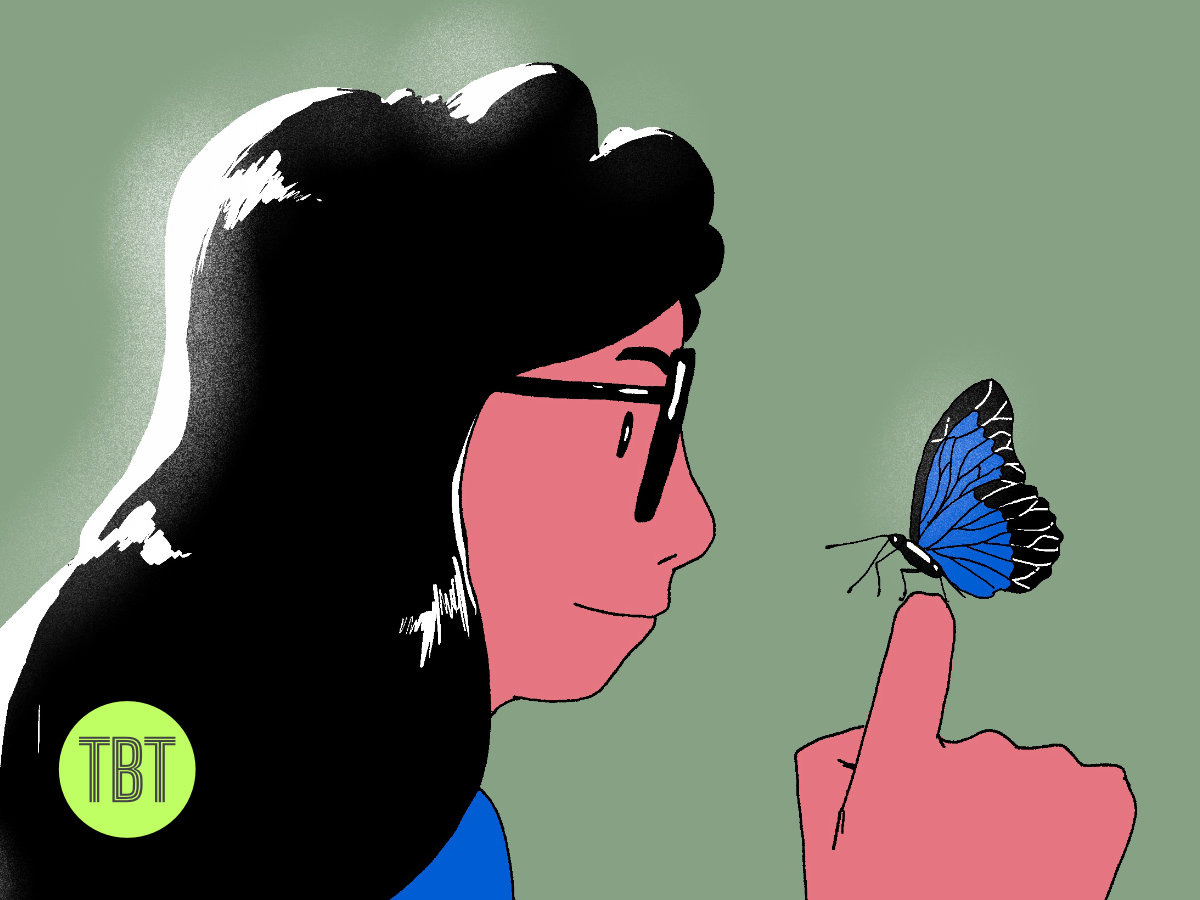
Illustration by Sharath Ravishankar
Life will always have one obstacle or another. Therapy does not resolve those obstacles. It has helped me connect with myself better so that I can respond to them in a healthier way. I was not using force to drag myself through the water—life—anymore. I was learning how to breathe. How to stop fighting every sensation. How to understand what was mine to carry and what was not.
More than anything, I was learning how to let go of things I had learnt that no longer helped me, thoughts that came from overthinking and, more importantly, people and places that disturbed my nervous system.
The benefits were cumulative. One session connected to another. One reflection helped me understand an older one. One sentence stayed with me for weeks and changed the way I approached a completely different situation. Nothing looked dramatically different after a single session.
The thing is… therapy doesn’t offer solutions. It’s like swimming lessons: the instructor can teach you how to breathe, how to float, how to move your arms and legs and what to do when panic takes over, but how you eventually swim is still on you.
It was the same with therapy: it gave me techniques, language, questions and a safe place to practise. But I still had to move. I still had to answer the difficult questions. I still had to make decisions, live with uncertainty, accept grief and support myself through the consequences.
I am still a work in progress, but therapy changed my life. The difference is that I recover faster now.
I still tie myself into knots, but I know how to sit with them. I still remain indecisive at times, especially when making choices about my own life. But some old patterns have changed more than I once thought possible. I no longer go silent when I have something to say. I have learnt to put myself first without believing that doing so makes me selfish.
I still take one session a month. I do not want therapy to be only an emergency service I return to when I am drowning. I want it to remain a place where I understand how I am swimming.
There are still days when I do not feel like going. Therapy demands time, money, honesty and emotional energy. A good session can still leave me exhausted. Difficult questions can still sit with me for days. But the person who exists after doing this work is someone I like.
Someone less harsh with herself. Someone who can feel deeply without automatically hating herself for it. Someone who understands the people around her while remembering that understanding them does not require abandoning herself. Someone who makes more decisions from clarity and fewer from fear.
I want to keep becoming her. After all, I promised my younger self that I would.