
Are Our Vegetables Really Losing Their Nutrition?
I went looking for answers in the data and with experts. Here’s what I found.

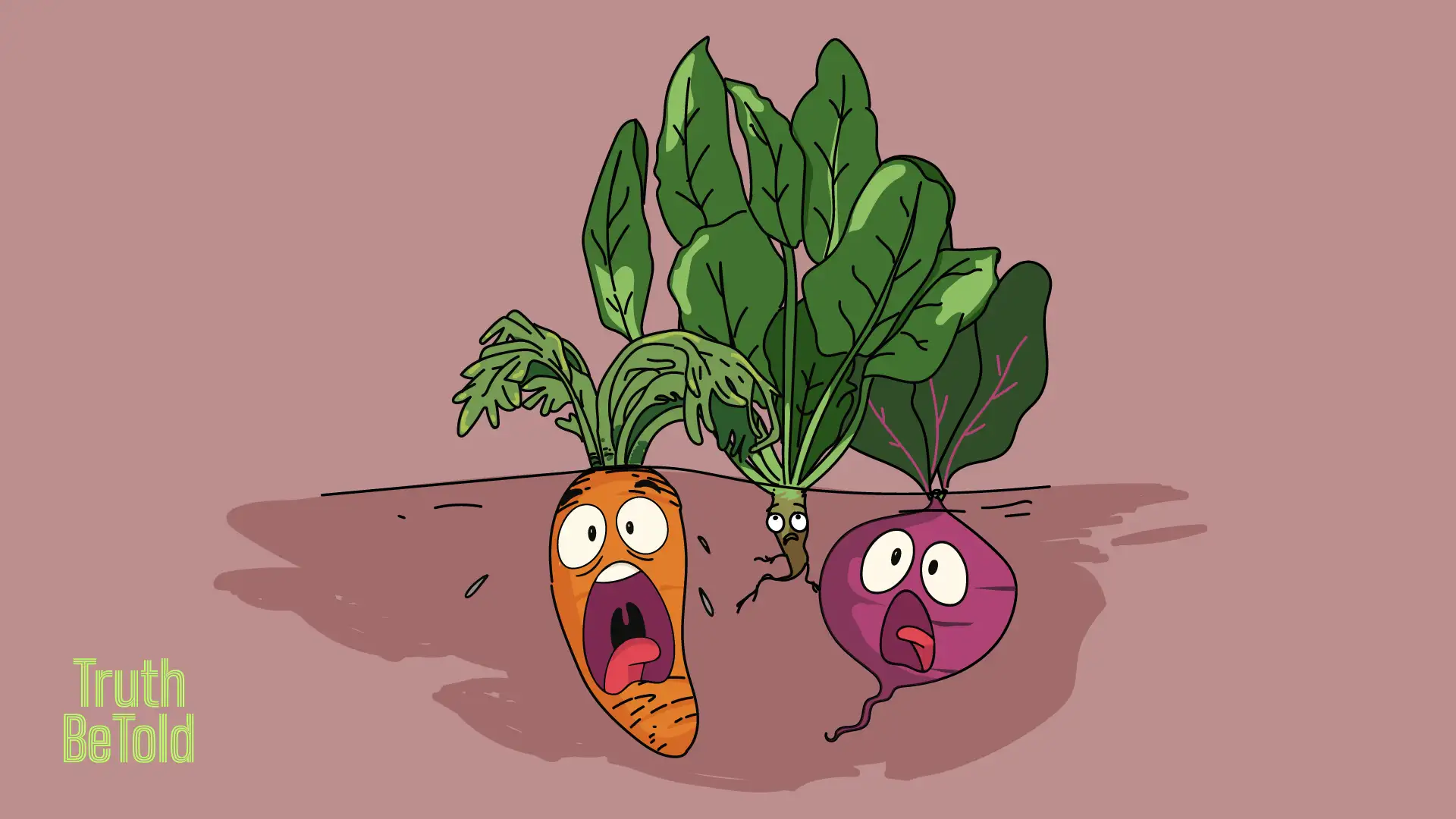
Illustration by Siddhi Bhandari
The most trustworthy source of food and
fitness journalism in the country.
Welcome to Truth Be Told, the weekly food and fitness newsletter published by The Whole Truth Foods.
Editor's note: When there is lack of clarity on matters of food and health, there is always scope for exploitation. The issues are complex, the truth is uncertain, and because it isn’t easy to live with uncertainty, it creates anxiety. That anxiety makes room for someone to step in and sell a solution (which may or may not really help). The job of journalism, in these situations, is to try and make things clearer: to make sense of the uncertainty and show readers a way to navigate.
In that spirit, my colleague Anushka Mukherjee has worked on today’s piece, which tackles one of the fundamental questions around modern food: what if our fruits and vegetables and grains are simply not as nutritious as we think? Is that true, and if so, how do we know, and what does it mean?
As always—and in a very TBT-ish spirit—there are no neat binaries. This piece won’t give you all the answers. But what Anushka has found will give you a direction. And, yes, she does have some suggestions too.
— Samarth Bansal (samarth@thewholetruthfoods.com)
In India, most of us buy fresh vegetables every 2-3 days. The freshness and "quality" of these vegetables—where the word "quality" encompasses everything from nutritional density to taste to colour—is a matter of great importance in our homes.
So, it wasn't surprising when a slow panic started gripping households over the last few years. Word had spread: our fruits and vegetables are no longer as healthy as they once were. Essential nutrients were now missing from our food.
Organic food companies sprung up in dozens, promising food without chemicals, fruits and vegetables that can finally come close to the ones from decades ago.
Is this true? Are we getting way less nutrients from these vegetables than we think? Could our diets be lacking in nutrition despite our best efforts at healthy eating?
I went on a hunt to figure this out, only to discover layers of assumptions and complexity of evidence on the way. What I found challenges both the alarming headlines and our instinctive responses to them.
I. Why Our Food Might Be Less Nutritious
There are three compelling theories explaining why our food may have lost nutritional value over time.
First, our soil is depleted. Plants absorb nutrients from soil through their roots. If soil lacks iron, zinc, or other minerals, plants can't pass them on to us.
As Professor Rattan Lal, a globally renowned soil scientist, puts it: “Soil is like a bank account. You need to deposit as much as you withdraw.”
The numbers paint a worrying picture. According to government data, 30% of Indian soil is degraded. The Soil Health Card scheme tested over 8.8 million soil samples in 2024 and found that less than 5% of soil has sufficient nitrogen, only 40% has enough phosphate, and just 20% has adequate organic matter.
This depletion happened through decades of intensive farming and heavy use of chemical fertilisers without replenishing what was taken. Monocropping—the practice of growing the same crop repeatedly—has worsened the problem. Today, nearly 80% of India's farmland is dominated by just five crops, which repeatedly extract the same nutrients year after year.
Second, the Green Revolution came with a hidden cost. In the 1960s, India faced a food crisis. Scientists developed new varieties of wheat and rice that could produce much more grain per plant, saving the country from famine. But these varieties had an unintended consequence.
When scientists bred crops for higher yields, they accidentally reduced the plants' ability to absorb and concentrate minerals. In a 2023study, the Indian Council of Agricultural Research found that modern varieties "no longer do the fundamental job of delivering nutrition from the soil to the grains." Even when soil contains nutrients, these plants can't extract them as effectively as traditional varieties did.
The impact is measurable: compared to pre-Green Revolution varieties, iron content dropped by 30% in rice and 19% in wheat, while zinc declined by 33% in rice and 27% in wheat.
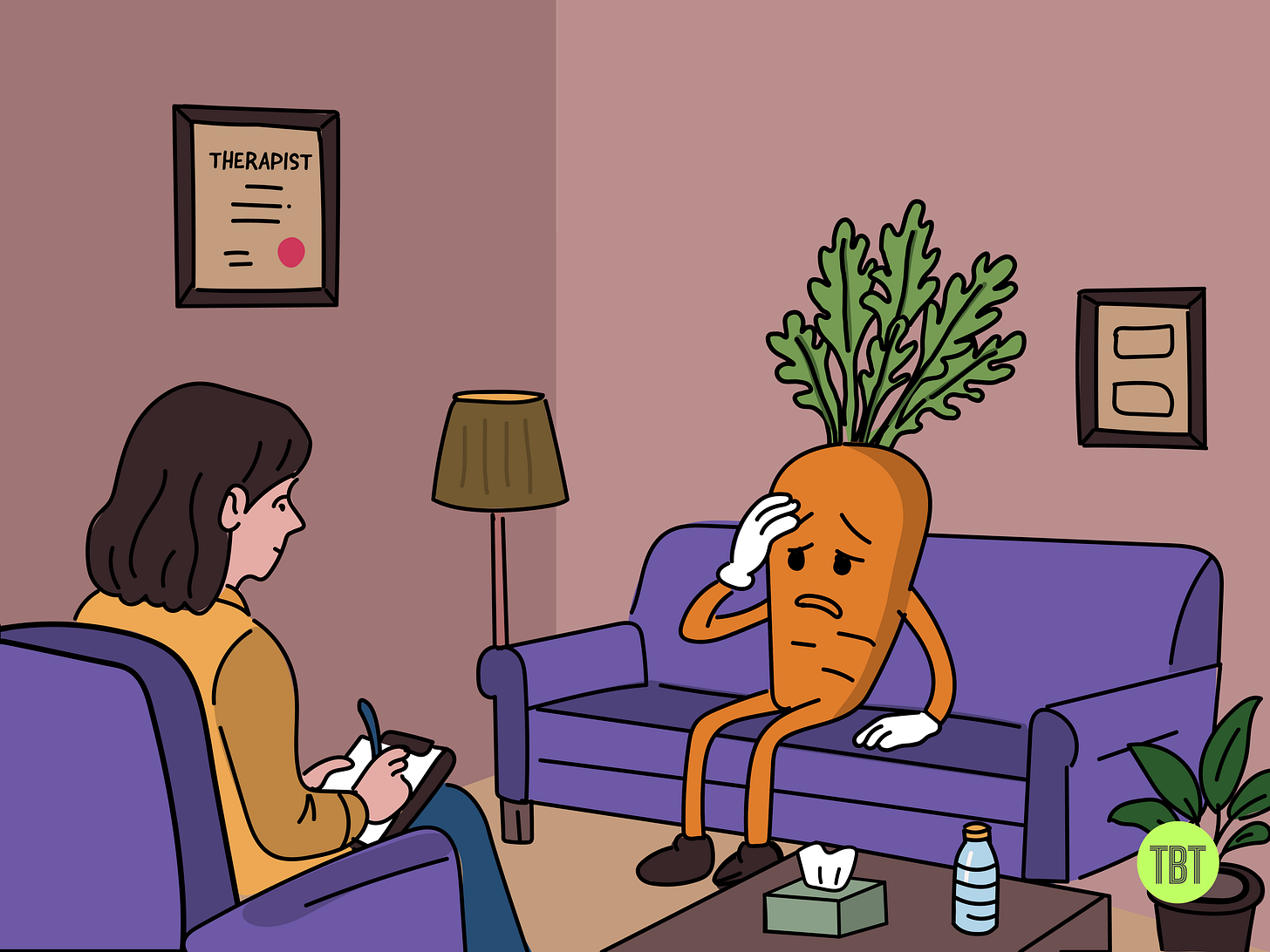 Illustration by Saumya Bansal
Third, there's the "dilution effect." When plants grow faster and bigger—thanks to more water, fertiliser, or atmospheric CO2—they produce more bulk but don't proportionally increase their nutrient content. Think of it like adding water to orange juice: you get more liquid, but less flavour per sip. Modern farming techniques that boost yields may actually reduce the concentration of nutrients in each bite.
These three mechanisms seem to provide solid evidence that our food has indeed become less nutritious. But here's where the story gets complicated.
II. Why The Evidence Isn’t As Clear As It Seems
Proving that today's food is definitively less nutritious than what previous generations ate runs into a fundamental problem: we don't have reliable historical data for comparison.
Let's examine what studies claiming dramatic decline actually show, and why their conclusions might be misleading.
The studies that spark panic
- The 2017 Indian Food Composition Table (IFCT) from the National Institute of Nutrition (NIN) analyzed 528 foods for 151 nutrients—the most comprehensive study of Indian food ever conducted.
When compared to the 1989 version, it appeared to show significant declines: 10% less protein in masoor dal, 60% less iron in apples, and what media reports called a "landslide" decline in micronutrients.
- A global study titled "An Alarming Decline in the Nutritional Quality of Foods" claimed even more dramatic losses. It reported that fruits have lost up to 85% of their iron and vegetables showed iron down by 88%.
- The widely-cited Kushi Institute analysis, comparing USDA data from 1975 to 1997, is the source of claims that "you'd need to eat eight oranges today to get the same vitamin A from one orange in the past."
These numbers sound alarming. But there are three fundamental problems with these comparisons.
Problem 1: Different measurement methods
Dr. B. Sesikaran, the former director of NIN who oversaw the 2017 IFCT study, explains: “The analytics methods used today are much more advanced than those used 50 years ago. Methods were much less sensitive, and now we are highly specific.”
The 1989 study used completely different sampling and analytical techniques. Much of its data was already outdated when published—based on analyses from the 1960s.
Problem 2: Massive natural variation
Here's something rarely mentioned in alarming headlines: vegetables naturally vary enormously in their nutrient content. Even if you collect a sample of a vegetable from two different corners of the same one-acre farm, Dr. Sesikeran explains, there will be a variation of 20% in their nutrient content.
Factor in differences in season, region, and variety, and natural variation can exceed1000% between samples. This means a reported "85% decline" might simply reflect which particular samples were tested, not a systemic collapse in nutrition. Some of the "landslide" changes—like 60% less iron in apples—fall well within the range of normal variation.
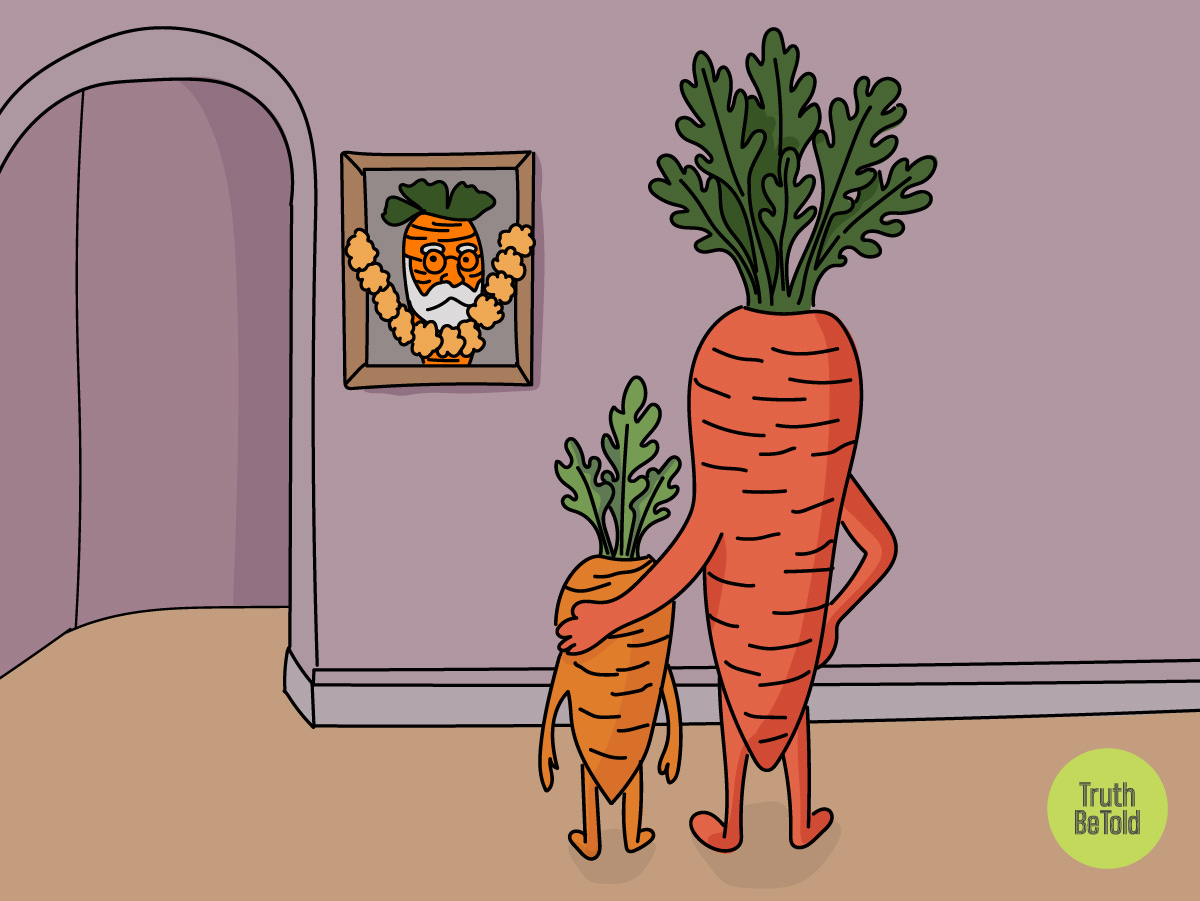
Problem 3: Comparing different crops entirely
The vegetables grown 60 years ago were completely different varieties from today's hybrid seeds. As Dr. Sesikaran admits, "We are afraid of comparison" because you're essentially comparing different crops bred for different purposes.
Moreover, when the absolute amounts of nutrients are tiny to begin with, large percentage changes can be misleading. A "60% decline" in iron might represent a change from 0.5mg to 0.2mg per 100 grams—a difference you could easily compensate for with dietary variety.
Dr. Sesikeran's conclusion cuts through the noise:
> “Let us not talk about whether it was more or less. Today the nutrient content of a carrot is this much, and it varies by this much. This is what we should know.”
III. What This Actually Means For Your Health
So we have real mechanisms that could reduce nutrition (soil depletion, crop breeding, dilution effect) but can't definitively prove historical decline due to measurement problems.
This seeming contradiction actually makes sense: the mechanisms are observable today, but proving their cumulative effect over decades is hard given the data limitations.
Where does this leave us? What to do and what not? Here’s my understanding based on my conversations with experts I spoke for this story.
1) Organic isn't a nutrition solution: While organic farming ensures residue-free food, it doesn't automatically mean more nutritious food. As Dr. Andaleeb Rahman from the Tata-Cornell Institute puts it: "Organic is not a silver bullet."
> “The moment certification comes in, only a few businesses can really survive. That creates monopolies, reduces food sovereignty, and concentrates power in brands.”
2) Supplements miss the point: If whole foods may have less nutrition, isolated vitamins in pill form aren't the answer. Your body absorbs nutrients from food more effectively than from supplements. Take supplements only for diagnosed deficiencies, not as insurance against food quality concerns. (More details in a previous TBT article.)
3) Buy regional and seasonal: Long supply chains and off-season growing compromise nutrition. Foods grown in their native geography and natural season maintain better nutrient profiles.
4) Prioritise variety over perfection: Dr. Rahman emphasises that dietary diversity matters more than obsessing over any single food's nutrient density. The more different vegetables and fruits you eat, the more you hedge against any nutritional gaps.
5) Choose local and smaller produce when possible: Dr. Sesikeran suggests favouring vegetables native to your region and smaller produce, which often indicates less industrial interference.
 Illustration by Siddhi Bhandari
The Bigger Picture
India is already responding to nutrition concerns at a systemic level through large-scale food fortification—iron-fortified rice in school meals and the public distribution system. This shows policymakers treat nutrition gaps as real and urgent, regardless of historical comparisons.
But here's what matters most: India's major nutrition challenges aren't really about whether a tomato has less vitamin C than it did in 1960. The real issues are poverty limiting access to adequate calories and lifestyle changes—sedentary habits, processed foods, longer supply chains—that affect how and what we eat. The rise in diabetes and obesity connects far more directly to these factors than to historical nutrient density.
After all this investigation, I've come to believe that the "nutritional collapse" narrative, while based on real concerns, distracts from more practical actions we can take today.
Don't let perfect be the enemy of good. In a world where anxiety about food quality can paradoxically lead to worse eating habits, the best response isn't panic or expensive solutions. It's the decidedly unglamorous advice that remains as true today as it was for previous generations: eat your vegetables, many different kinds, as fresh as you can get them, as often as you can.
PS: If you have more information or perspective on this topic and are willing to share, please write to me at anushka@thewholetruthfoods.com. I would love to learn more and do a follow-up if new understanding emerges.
Here is a short feedback form to help us understand how we're doing. Would you please share your thoughts? Link here. Thank you!