
How to Help Parents Eat Enough Protein
No convincing, guilt, or awkwardness. Just behaviour change science.

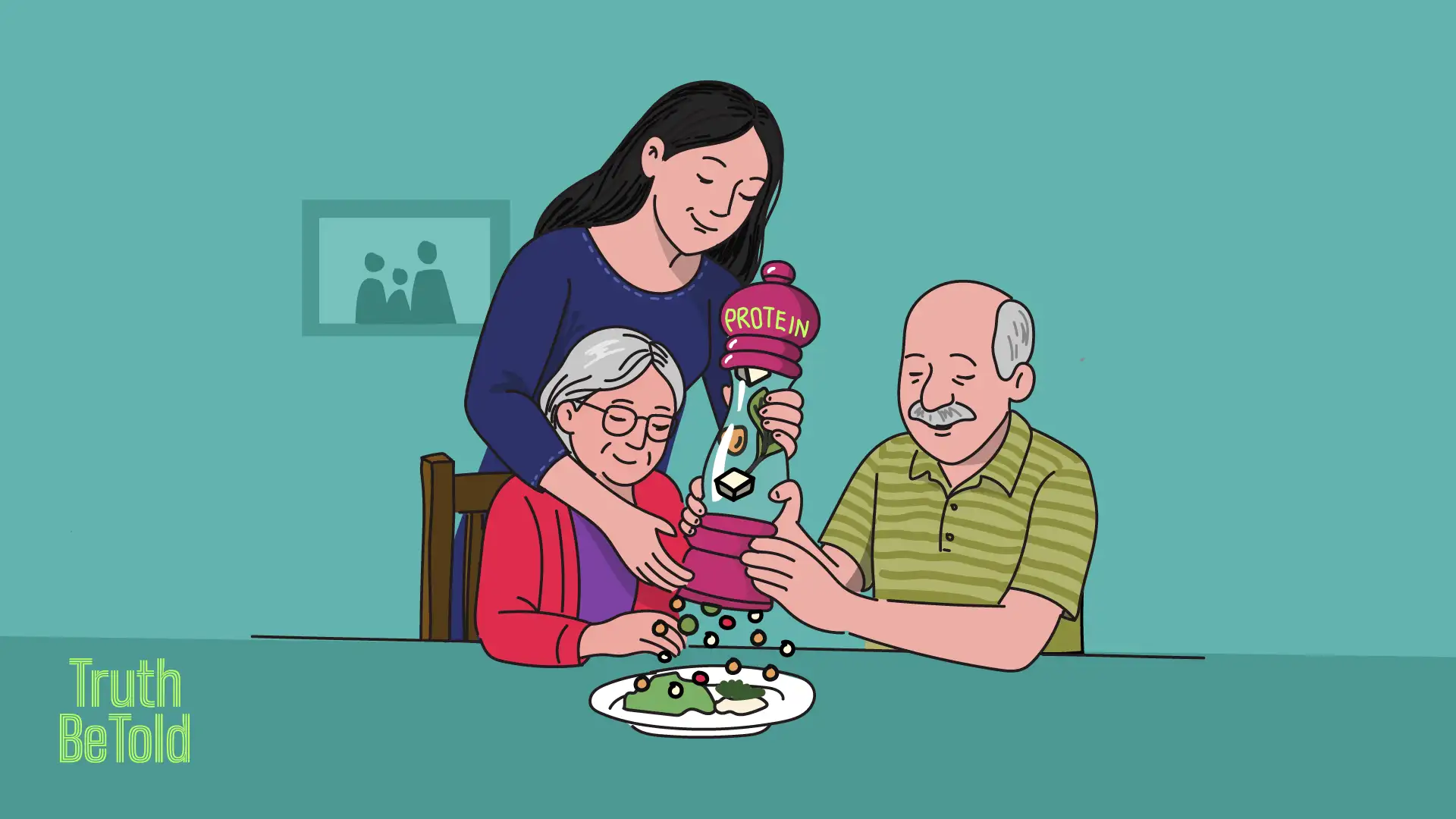
Illustration by Siddhi Bhandari
The most trustworthy source of food and
fitness journalism in the country.
Welcome to Truth Be Told, the weekly food and fitness newsletter published by The Whole Truth Foods.
Editor's note: I was chatting with a nutritionist recently about how it's so easy to say "get your parents to have more protein," but we just don't factor in the behavioural, emotional, and biological differences. How the standard tips just fall flat. She told me how her husband—and even her 19-year-old—would refuse protein powder despite seeing her use it daily. Such a relatable problem. I've worked on this myself with my mom, who now regularly takes whey and understands why, yet we're still figuring out how to add more protein to her everyday diet.
This is exactly what Natasha Zorana tackles in the comprehensive guide we are publishing today, approaching it from a behaviour change lens instead of just nutritional advice. This transformation is slow but long-lasting—and deserves the time and attention to do it properly. Natasha worked hard to put this together, and I'd encourage you to read the whole thing.
Natasha Zorana is a behaviour change specialist who supports people in closing the gap between "I want to change" and "I did it" with evidence-based skills and support. She also mentors qualified nutritionists in the Growth Academy. To learn more about behaviour change science and skills from her, check out "How to Change" and her Instagram.
— Samarth Bansal (samarth@thewholetruthfoods.com)
Your parents sit across from you at the dining table, the same one where you ate countless meals growing up with them. Your mother mentions feeling tired more often. Your father struggles to get up from his favourite chair. You feel a knot in your stomach.
The conversation you've been avoiding hovers in the air between you.
You've read the research. You’ve heard about ageing, muscle mass and adequate protein intake. You’ve even mentally calculated the amount of protein in your parents’ current diet. You've seen the statistics about falls, frailty, and loss of independence. But sitting here, watching the people who raised you struggle with something as basic as standing up, the science feels both urgent and utterly inadequate.
Because this isn't really about protein, is it? This is about love, worry, and the delicate dance of caring for someone who once cared for you.
So, how do you navigate this moment?
Maybe you start the “protein” conversation. Maybe you try presenting the facts and convincing them. Maybe you use tips and tricks recommended by others.
But nothing seems to work for your parents. Nothing changes their eating behaviours. At least not for long.
What else can you do? Should you just give up?
As an evidence-based behaviour change specialist trained in helping humans change their behaviours—including eating enough protein—my answer is no.
But before we discuss what could work, we need to address the elephant in the room…
Why Won’t Parents Just Listen?
Because they are human…just like you.
Think about the last time someone suggested you change something fundamental about your daily routine. Maybe your boss said you should do your work another way, or a friend recommended a quick solution to a problem you shared with them. Or remember when your parents forced you to wake up early or clean the room or eat your vegetables, or go to the market? Did you immediately want to do it? Or did you feel that familiar flutter of... something? Hesitation? A tiny rebellion?
That flutter is your autonomy speaking (one of your 3 basic psychological needs). It's the same voice your parents hear when protein enters the conversation, but with added layers of complexity most of us might not have considered.
Their brains carry decades of food experiences and cultural beliefs. They have lived most of their lives in a world where protein was not even a thing. When you suggest eating protein, their brains might think: "I have lived so many years eating this way. How can it be wrong?" When you mention muscle loss, they might hear: "You're getting old and weak." The idea of needing to eat differently from others in their social circle can feel like an admission of failure or weakness.
And then there’s something even deeper. For decades, your parents were the experts on food and nutrition in your house. Right from breastfeeding as a newborn to maybe your teenage years, they taught you what to eat, when to eat, and how much was enough. Suddenly finding themselves on the receiving end of nutritional advice can feel like their expertise—their very identity as the family's caretaker—is being questioned.
Your father, who takes pride in his self-sufficiency, might interpret your concern as doubt about his ability to take care of himself. Your mother, who spent her life ensuring everyone else ate well, struggles with the idea of "special" foods for herself. (We live in a society where a “good” woman/ mother = quiet martyr.)
When you add cultural concerns about supplements (widely believed to contain steroids and chemicals), economic guilt about spending money on "extras," genuine confusion about conflicting health information, bad-tasting protein meals and digestive issues, their resistance starts to make perfect sense.
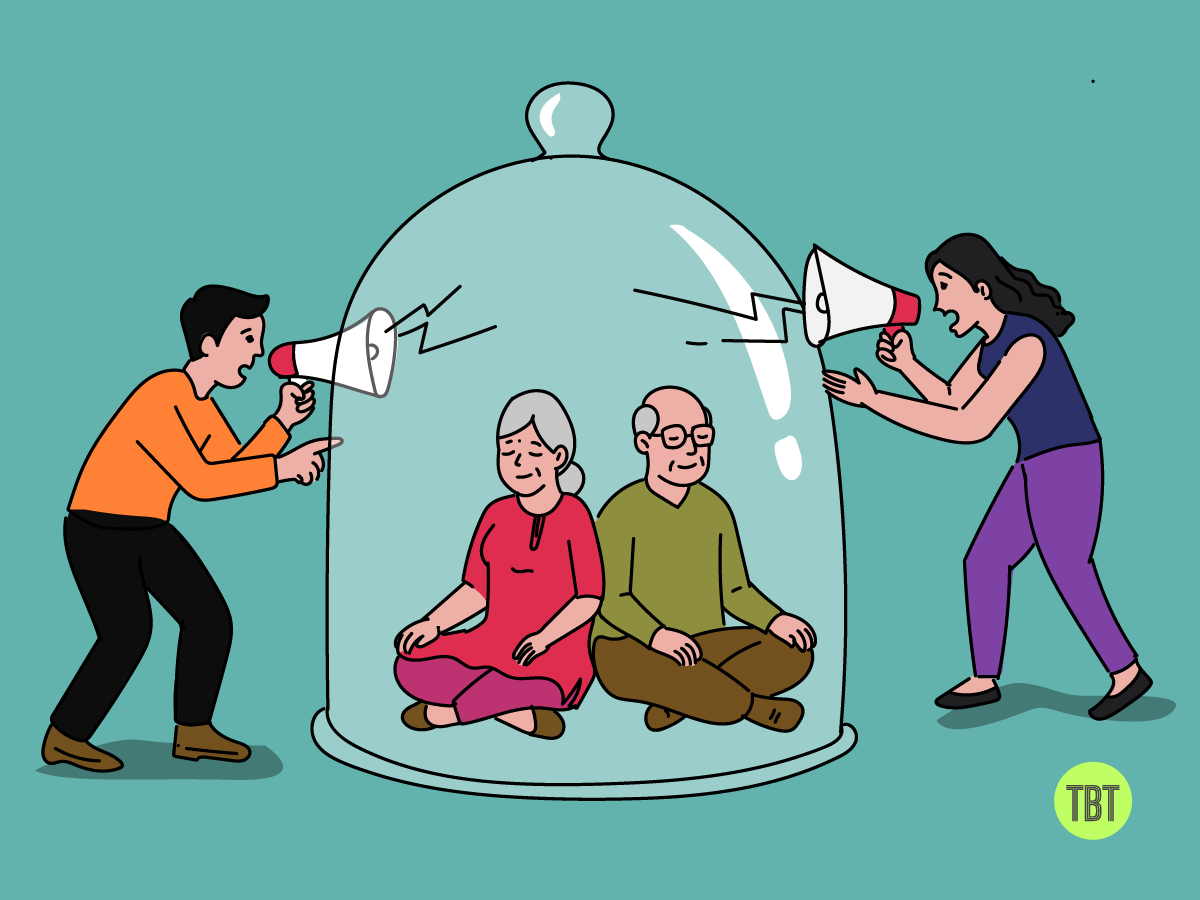 Parents resisting change. Illustration by Siddhi Bhandari
If fighting against their normal human resistance didn’t change their behaviour (which science agrees with), it would be more helpful to work with it while gently opening space for new possibilities.
People don't change because we convince them to. They change when they feel heard, understood, and free to choose their own path forward.
Your parents need to feel like they're choosing, not being chosen for.
When we feel safe to opt out, we’re more likely to opt in.
Consent matters, right?
The Stages of Change
Subhashini and Chandhini—identical twins, both MSc in Nutrition and students of my growth academy for nutritionists—were standing in their kitchen, looking at the chopped broad beans their mother had kept out to cook as a side dish for lunch.
“This is the quantity we have,” Amma said. It was not enough for 4 people.
The daughters looked at each other and realised this was a great opportunity to add some protein to the family’s lunch.
Subhashini quietly took out a pack of tofu from the fridge and began thawing it.
Their mother looked over and asked, “What are you going to do with that tofu?”
The daughters didn’t launch into explanations. They simply said, “We’re increasing the quantity.” They grated tofu, mixed it with coconut so it blended right in, and sautéed it as usual.
Lunch was rasam rice with broad beans and tofu poriyal.
Their parents ate it, didn’t notice anything different. That’s how it started.
Over time, the daughters kept adding protein-rich ingredients to dishes where taste or texture wouldn’t be affected. Examples:
- Added tofu to curries inspired by undhiyu.
- Added soybeans to mixed veggies sabji and roti.
- Mixed besan or unflavoured protein powder into wheat flour for rotis.
- Combined grated tofu with beetroot muthia.
- Tested cocoa protein powder in ragi pudding so colour and taste stayed comforting.
When their parents asked about new tastes, “Did you add chocolate or cocoa powder?” the daughters replied casually, “Yes, some cocoa protein powder.” Or, “Some tofu/soybeans.”
They also started keeping roasted chana on the table with upma. Parents missed it when it was absent and started adding it themselves.
Once, their parents didn’t like the texture of soya chunks in kurma, so the daughters changed the recipe instead of forcing it. Now, after many experiments, protein-rich tweaks are part of normal family meals.
There was no big argument; just casual mentions and gentle nudges.
What Happened Here?
Their parents moved through all 5 stages of change:
- Pre-contemplation: Parents never thought about protein.
- Contemplation: Curiosity, “What are you doing with that tofu?”
- Preparation: Daughters grated tofu, blended with coconut, planned around the familiar taste of the poriyal.
- Action: The parents ate poriyal. Increased their protein intake once. Parents also tried other modified recipes and little changes, like roasted chana with upma. Whenever they objected (soya chunks), the daughters noticed and didn’t force them.
- Maintenance: Over time, protein-rich tweaks became normal as long as flavour and texture stayed acceptable.
We all move through these stages when considering any meaningful change. These stages aren't linear, and they're not time-bound. Some people spend months in one stage. Others move through several stages in a single conversation.
As a helper, your role isn't to push your parents through these stages faster. It's to walk alongside them, matching your approach to where they are right now.
Stage 1: “Protein? I Don’t See a Need” (Pre-contemplation)
When protein isn’t on their radar.
What you might hear:
- “I eat fine. Protein is for bodybuilders.”
- “It’s just marketing for chemicals.”
- “My parents lived long lives eating my way.”
Maybe they’re unaware of protein needs, or convinced protein is unnecessary ( their identity as good eaters is unchallenged). Or, their autonomy feels threatened.
Your mission: Plant seeds of curiosity, don’t push. This is especially important if previous conversations about protein went poorly. Patience here builds safety.
Your toolkit:
— Add Environmental Cues: Put protein-rich foods in visible spots—fridge, cabinets, table—just like tea or fruit. Let them become part of the house. Wait for a “What’s this?” question.
Example: Subhashini and Chandhini kept chana and tofu visible. Their mom got curious when they took out tofu.
— Become a Behaviour Model: Let them see you enjoy familiar-looking protein-rich foods, like eggs with breakfast, protein bars, sabzi, rolls, shakes. Express how yummy it is. Maybe casually offer a taste. Don’t talk health. Let curiosity arise on its own.
Example: Ramji’s familiar-looking pista badam protein shake prompted, “What’s this pista badam?” from his mom, even after her earlier scepticism.
— Share Third-Person Stories: No. Not like Sharmaji ka beta. We all know why that doesn’t work. Use stories matching your parents’ context and challenges. Use examples of people they like or can relate to. Highlight only the fun parts to evoke curiosity. No comparison. No criticism.
Example: Anita showed her parents a reel of Indian parents enjoying a protein shake. Her mom asked, “Nice. How did they make it?”
Bonus: You can also use fun family quizzes to discuss protein in a non-threatening way.
Stage 2: “I’m Curious But Torn” (Contemplation)
When they’re considering, but conflicted.
What you might hear:
- “It looks good, but may not taste good.”
- “I feel tired, but I’m not sure I need this.”
- “Is all this bad for kidneys/digestion?”
They’re experiencing ambivalence—pulled in two directions. This is normal, human, healthy.
Your mission: Create safety to taste protein once.
Validate concerns, evoke deeper interest. Don’t push or fix.
Your toolkit:
— Prioritise Familiarity, Not Protein: Answer parents’ spoken (“what’s this?”) and unspoken (“will it ruin the taste?”) questions casually. Present new ingredients as simple experiments, not “health changes.” Make protein feel familiar. Create protein-rich versions of the dishes they love without changing the taste or mouthfeel.
Examples: Subhashini called tofu an experiment to increase poriyal quantity; Ramji offered his mom a sip of his shake by saying, “It’s a powder with real pista badaam”.
— Add a Trusted Professional: No. Not for a “I told you so” moment. Suggest consulting a nutritionist or doctor for THEIR safety and validation. Frame it as their choice.
Example: “Safety matters. Some people ask safety-related doubts to nutritionists. That’s one option, if you want.”
If they trust a professional already, connect them to protein.
Example: To create safety, Nargis brought up her mom’s favourite story of a hospital stay years ago when the doctor added eggs and sprouts daily.
— Heart-to-Heart Conversations: “No way! So uncomfortable!”. I know. This is hard but highly effective if you use evidence-based skills. Avoid the 12 roadblocks, express deep love and concern and guide toward tasting protein once. (Learn skills in this article)
Stage 3: “Show Me How” (Preparation)
They’re ready to try and need a positive first step.
What you might hear:
- “Which options are best for me?”
- “How do you prepare this?”
- “When can I eat this?”
Your mission: Help them succeed with ONE more-than-usual protein meal (even 5g more counts). Celebrate it. Focus on initiation, not consistency at this stage.
Your toolkit:
— Prepare a Full Serving: If they’re familiar with a protein-tweaked dish, make a full serving for them. Example: Ramji’s mother liked the sip, so he made her a protein shake; Chandhini and Subhashini made enough tofu poriyal for the family.
— Make an Ask-Offer-Ask Sandwich: Ask for their ideas. If they’re stuck, ask permission to share your ideas. Offer a menu of choices, “Some people try eggs. Others like shakes, traditional dishes with added protein…”. Ask, “Which, if any, would you like to try?” Give them control over options.
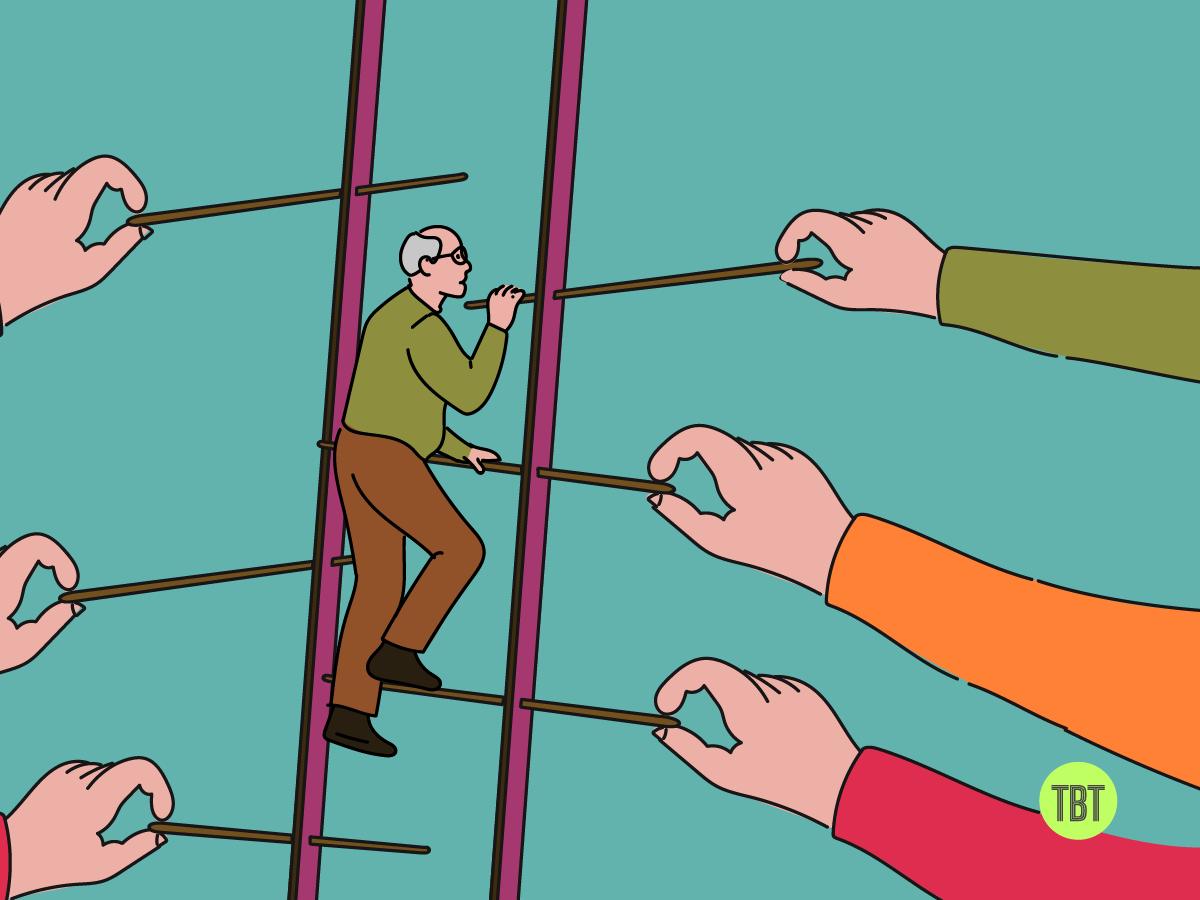 Incorporating protein step by step. Illustration by Siddhi Bhandari
Stage 4: “I’m Doing the New Change, and It’s Challenging” (Action)
They’ve started and face normal challenges.
What you might hear:
- “Extra protein upsets my stomach/weird texture.”
- “I worry about cost.”
- “I forgot/Don’t want the same taste.”
Obstacles are normal. How these obstacles are addressed determines if they continue or retreat to earlier stages.
Your mission: Build frequency. Collect frequent positive protein experiences. Normalise friction as feedback.
Don’t push them to be consistent just because they started. Instead, experiment. Collect data. Be curious about what made an attempt fail. Treat it like a fun puzzle. Test, adjust and celebrate.
Your toolkit:
— Create Easy Protein Opportunities: Instead of making protein its own special task and creating friction, quietly insert it into familiar meals. Serve protein buttermilk with lunch, add soybeans/paneer/chicken to sabji, boiled eggs with breakfast, protein powder in flour or curd, roasted chana and peanuts for snacks. Look for opportunities to add protein.
— Collect Feedback: Take feedback after each attempt. Listen curiously to spoken and unspoken objections—taste, cost, digestion, boredom. Sometimes they might not say it directly to protect you. (e.g. Anita’s mom saw the cost of the protein powder and said, “Good for you kids. Not for me”). Do not dismiss any concern. Avoid fixing reflex. Validate every concern, ask for ideas. This brings out the best solutions. If adjustment is easy, make it without debates. Example: After feedback, Subhashini and Chandhini switched from soya chunks to something more palatable.
— Adjust Dose, Not Decision: Try a smaller scoop, grated tofu instead of cubes, new flavours/ingredients. Create 7–10 go-to protein meal choices at home and for eating out. Example: After digestive discomfort, Anita’s mom tried plant protein instead of whey.
— Celebrate and Affirm: Highlight small wins (their actions and qualities)—trying a new dish, enjoying taste, planning better meals. Take photos, cook together, find joy in new experiences.
Stage 5: “I’m Making This Work Long-term” (Maintenance)
They're integrating changes into their life while navigating inevitable setbacks.
What you might hear:
- “I stopped everything when I was sick.”
- “Forgot to buy more protein ingredient.”
- “I like these recipes, but revert when guests come.”
- “Sometimes I feel heavy after so much protein.”
Protein is no longer new. It's part of life. But disruptions happen (illness, travel, festivals, guests, budget shifts, digestion changes, old patterns). Many people see these interruptions as personal failure and stop, but setbacks are normal.
Your mission: Keep protein in orbit. Easy to return to, hard to forget—cosy as a couch, safe as a sofa. Focus on flexibility, not consistency. Build skills for every season of life. Make protein feel like a part of the family’s food identity, not a strict plan. Do we feel like a failure for not having roti or rice for a month? We look forward to enjoying it next time. That’s the safety we want to build here.
In this stage, depending on the type of setback, you can use any of the tools discussed in the previous stages.
More tools:
— Connect to Identity/Values: Repeat parents’ strengths back to them. Frequently, help them connect the benefits from increased protein intake to what matters most to them and who they are as a person. Strong, caring, healthy, mobile, creative, optimistic, flexible, helpful, etc. This improves the quality of motivation, which sustains change.
Example:
- “My friend said that the fact that your parents are open to change at 60 inspires me to also try.”
- “Today reminded me of how you used to lift all the heavy grocery bags yourself and refuse to let us help. Same energy.”
- “The way you’ve been planning lunch with [protein source] these days…it’s making all of us eat better. Thank you.”
- “Your idea for this paneer recipe was so creative!”
— Practice Flexibility: You know what usually comes with predictable disruptions? All-or-nothing thinking. Inflexibility. To increase physical flexibility, we stretch. Similarly, to increase cognitive flexibility, we stretch. Predict interruptions (festivals, guests, etc). Brainstorm flexible options ahead. Use Ask-Offer-Ask tool. Consider writing “if-then” statements (implementation intentions).
— Practice Saying ‘How Human of Us’: How human of your parents to experience setbacks. How human of you to want to problem-solve immediately. Notice it. Normalize setbacks; treat lapses as data, not a problem. Decentre consistency. Being inconsistent with their own nutrition does not make someone bad. Be curious about the pause. Validate feelings. Shift from failure to learning. Discuss what happened without an agenda. Many times just listening deeply is enough.
— Create Positive Fresh Starts: If recovering after setbacks feels like a chore, use the fresh start effect to make it feel like a gift. Set a day/ date and time/cue. Monday, 1st of the month, any landmark.Then, prepare. Shop for an ingredient, pick a new recipe, decorate the house, plan a protein meal surprise, etc. Make the restart feel positive. A joyful celebration. Not a shameful return.
The Bigger Picture
Khyati watched her 91-year-old Baa sip a protein shake and smile.
"Saras chhe," Baa said. (This is good.)
This is the same Baa who ate rotis with just pickles for years. Who weighed barely 35 kilos and said, “I’m still stronger than you” to the younger family members.
Khyati didn't argue with decades of life experience. She didn't lecture about muscle mass or ageing. She simply made that protein powder taste like home. Like the elaichi and nuts flavoured milk they used to make together, like the kesar pista ice cream Baa always loved.
So, Baa tried it.
At 91, she chose change. Because it felt like love, not like being fixed.
I want you, the wonderful human reading my words, to know this.
You're not just helping your parents eat more protein. You're learning to love without controlling. You're discovering that the people have wisdom to offer—including the wisdom of their own pace, their own choices, their own surprising capacity for growth.
Every time you choose curiosity over convincing, you're not just changing their nutrition. You're changing the way your family loves each other.
This work is hard. You'll need your own support system—friends who understand, siblings who share the load, maybe even professionals who can guide you when emotions run high. Because watching someone you love struggle, while holding back your desperate urge to fix everything immediately, requires strength you didn't know you had.
And it’s worth it. When you practice these skills—meeting people where they are, planting seeds instead of demanding harvests, creating safety for change instead of pressure—you don't just become better at helping your parents. You become the kind of person everyone feels safe to grow around.
Your children will learn from watching how you care for the family. Your friends will seek you out when they need support, not advice. Your relationships will deepen because people trust you with their vulnerabilities.
The protein conversation was never really about protein. It was about becoming the person this world needs more of—someone who leads with love, not lectures.
So, spread the love. Struggle or success, share your stories of trying to help someone (or yourself) with a difficult change in the comments below. Every human who tries to evoke a change makes it easier for the next human to believe change is possible.
Your Baa might be 91 years old and stubborn and perfectly content with pickles and rotis. But maybe, just maybe, she's also waiting for someone to offer her pista badam flavoured love in a glass.
And maybe that someone is you.:)
Here is a short feedback form to help us understand how we're doing. Would you please share your thoughts? Link here. Thank you!